 blog
blog
Commercial Roof Inspection vs Full Replacement Guide
Table of Contents
- Why Commercial Roof Inspection vs Full Replacement Is a Costly Decision
- What a Commercial Roof Inspection Checklist Actually Covers
- Inspection Scope vs Replacement Scope: What Each One Really Involves
- What Your Commercial Roof Inspection Report Should Tell You
- Commercial Roof Repair vs Replacement: Matching the Fix to the Damage
- Commercial Roof Inspection Frequency and Post-Storm Assessments
- Cost Factors, Lifecycle Value, and Minimizing Business Disruption
- Conclusion: Let Inspection Findings Drive the Decision
- Frequently Asked Questions
Last Updated: October 12, 2026
Why Commercial Roof Inspection vs Full Replacement Is a Costly Decision
When a commercial roof starts leaking, the pressure to replace it can feel overwhelming. But the commercial roof inspection vs full replacement decision is rarely simple, and getting it wrong can cost far more than the leak itself.
A full tear-off disrupts tenants, interrupts operations, and commits a facility manager to a major capital project. An inspection costs a fraction of that and often reveals years of remaining service life.
Below, we break down what a commercial roof inspection covers, how it differs from a full replacement, and how to use the findings to make a defensible decision.
What a Commercial Roof Inspection Checklist Actually Covers
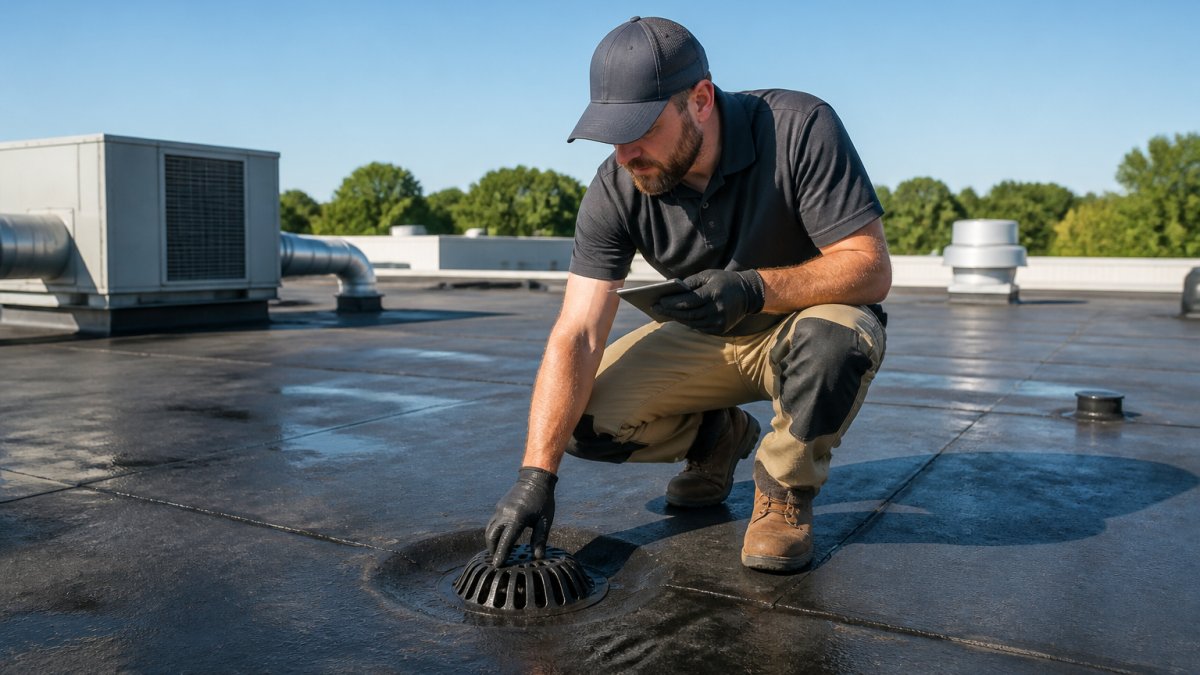
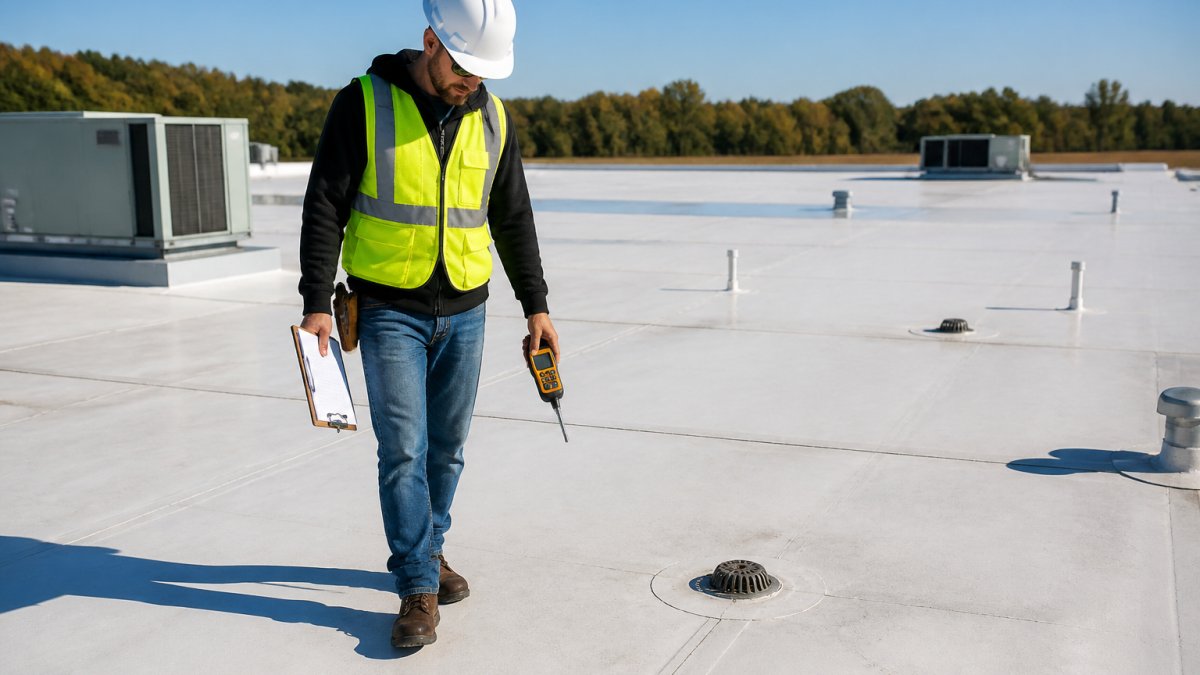
A commercial roof inspection checklist is a structured evaluation of every roof system component, not a quick scan from the ground.
Surface, Membrane, and Seam Evaluation
The membrane is the roof's first line of defense, so inspectors look for punctures, blisters, open seams, and areas worn thin by foot traffic or equipment.
Seams matter more than most owners expect: a single failed seam can let water travel sideways beneath the membrane, far from where the leak appears inside.
Moisture Testing and Concealed Damage Detection
Concealed damage is where a professional assessment earns its keep. Water entering through a small breach can saturate insulation and sit against the deck for months before showing up as a ceiling stain.
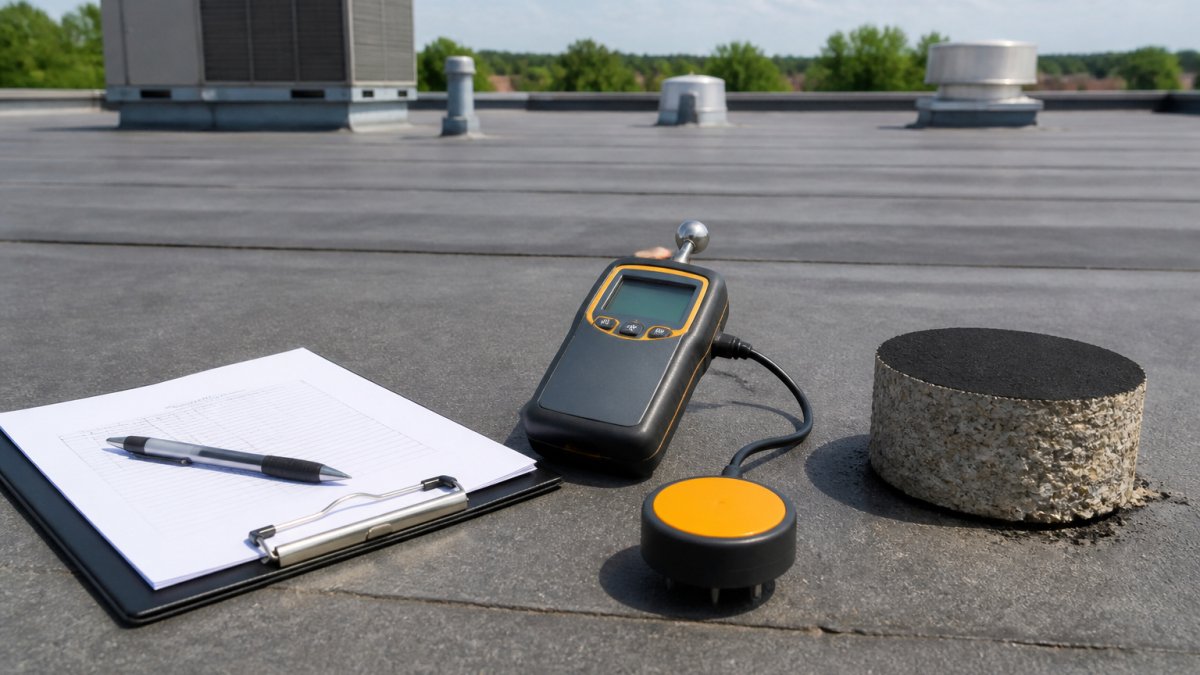
Moisture testing such as infrared scans and core sampling maps where the roof is wet and how far saturation has spread, which determines whether repair is even possible.
Inspection Scope vs Replacement Scope: What Each One Really Involves
The scope of an inspection and a replacement are fundamentally different projects, and confusing the two is a common mistake. An inspection is diagnostic: it gathers evidence about the roof's condition without altering it.
That asymmetry is the point. An inspection preserves every option; a replacement eliminates all but the most disruptive and capital-intensive one. Understanding each scope lets a facility manager defend the decision to a CFO, board, or insurer.
| Dimension | Inspection Scope | Replacement Scope |
|---|---|---|
| Primary purpose | Diagnose condition and quantify risk | Remove and rebuild the roof system |
| Deliverable | Written report with photos, moisture map, condition ratings, repair priorities, and remaining service life estimates | New membrane, insulation, flashing, and drainage components with manufacturer warranty |
| Roof system after work | Unchanged | Fully renewed |
| Typical duration | A few hours to a day, depending on roof size and access | Weeks, often phased around weather and occupancy |
| Occupant and business impact | Minimal; no roof access restrictions for tenants | Noise, staging, debris, crane or hoist activity, and possible interior protection |
| Reversibility | Findings can be re-verified or second-opinioned | Once torn off, the original system is gone |
| What it cannot do | Fix leaks, restore membrane, or extend service life | Diagnose anything beyond the scope of the new assembly |
What an Inspection Delivers That a Replacement Cannot
An inspection produces information: a condition rating for each roof section, photographs keyed to a roof plan, moisture test results showing wet insulation extent, a separation of urgent repairs from items to monitor, and a remaining service life estimate.
A replacement delivers a new roof system and a warranty, but it does not tell you whether the old roof could have been restored, whether moisture was confined to one quadrant, or whether the deck was sound.
What an Inspection Cannot Do
An inspection is not a repair. It will not stop an active leak, restore a failed membrane, or extend service life on its own. If a roof is leaking into occupied space, the inspection and emergency repair often happen in the same visit. The inspection's job is to tell you whether that repair ends the problem or starts a larger project.
How Inspection Findings Feed a Replacement Decision
A replacement decision should trace to specific findings, not a verbal recommendation. Findings that most often justify full replacement:
- Moisture testing shows widespread saturation across multiple roof sections, not isolated wet areas
- The roof deck shows structural deterioration, deflection, or corrosion that cannot be repaired in place
- The existing membrane has reached or exceeded its expected service life and repairs are no longer holding
When findings show the opposite, damage confined to specific areas, a sound deck, and meaningful remaining service life, repair or restoration stays on the table. The inspection makes that distinction defensible.
What Your Commercial Roof Inspection Report Should Tell You
A commercial roof inspection report turns observations into a decision. A useful report does more than list problems; it tells you where the roof is failing, how fast conditions will worsen, and what each option costs long-term.
Look for these elements in any report:
- A condition rating for each roof section, not just one overall score
- Photographs with locations marked, so you can verify findings yourself
- Moisture test results showing the extent of wet insulation
If a report only says "roof needs replacement" with no supporting evidence, treat it as incomplete. A responsible contractor will show you the findings and explain the reasoning.
Commercial Roof Repair vs Replacement: Matching the Fix to the Damage
The commercial roof repair vs replacement question comes down to three factors: damage extent, roof age, and whether the underlying structure is sound. Localized problems rarely justify a full tear-off; widespread saturation or a failing deck usually does.
When Localized Repair or Restoration Makes Sense
Repair or restoration is right when damage is confined to specific areas and the rest of the system is holding up. A few failed seams, a punctured membrane near an HVAC unit, or isolated flashing problems can typically be corrected without touching the whole roof.
Restoration, cleaning and coating the existing membrane, can extend the life of a structurally sound roof and improve energy efficiency by reflecting sunlight. It works best on roofs that are aging but not yet saturated.
When Full Replacement Is the Only Responsible Option
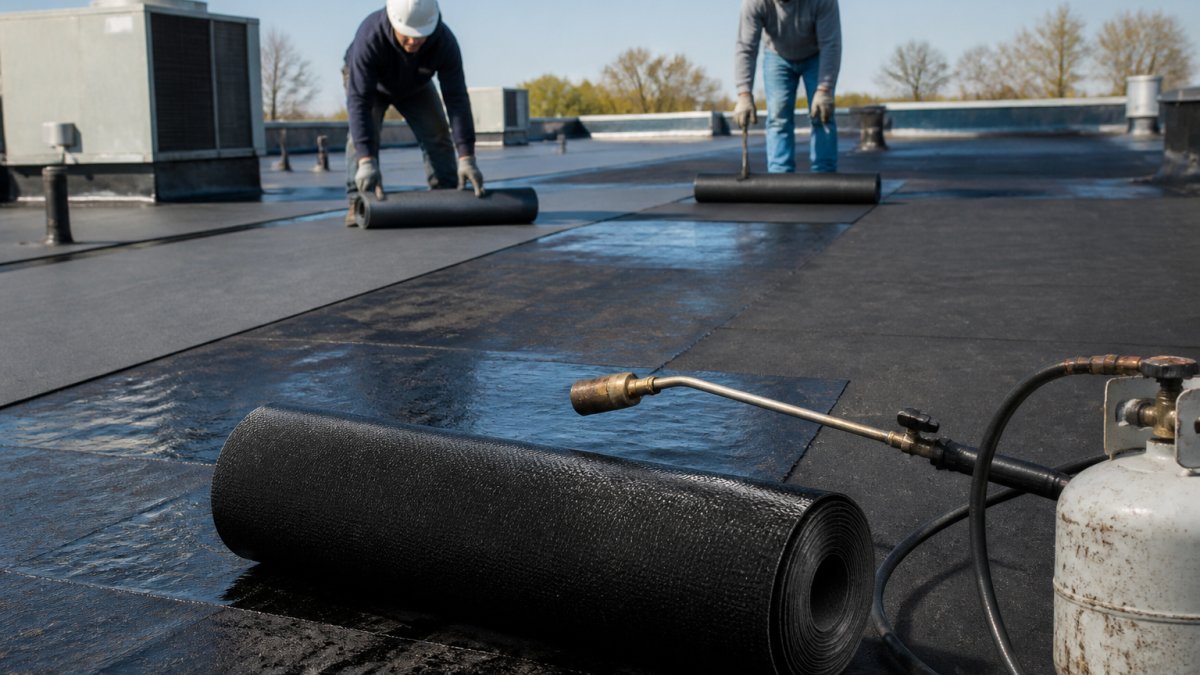
Replacement becomes necessary when damage is widespread or the roof has reached the end of its service life. If moisture testing shows wet insulation across large sections, patching individual spots will not solve the underlying problem.
The same is true when the deck has structural damage or repeated repairs have stopped holding. Continued patching then throws money at a system that cannot be saved.
Commercial Roof Inspection Frequency and Post-Storm Assessments
Commercial roof inspection frequency should follow a simple rule: inspect on a schedule, and again after any major weather event. Many facility managers find twice-yearly inspections, in spring and fall, catch small problems before they become leaks.
Post-storm assessments matter just as much. High winds and hail can damage seams and flashing in ways invisible from the ground, and a quick assessment after a severe storm identifies breaches while they are still minor.
Cost Factors, Lifecycle Value, and Minimizing Business Disruption
Most comparisons of inspection versus replacement stop at upfront price, the least useful number, because the two are not competing purchases. One is a diagnostic service, the other a capital project. Compare them on cost drivers, lifecycle value, and operational impact.
What Actually Drives the Cost of Each Option
Inspection cost is driven by roof size, access difficulty, the number of sections and levels, and the diagnostic methods used.
Because pricing is project-specific and varies by region, material, and scope, require line-item bids separating tear-off, deck repair, insulation, membrane, flashing, and disposal. That structure lets you compare bids honestly and see where a contractor is cutting scope.
Lifecycle Cost: The Number That Actually Matters
Lifecycle cost looks at the roof over its full service life, not just the year it is installed. Components include:
- Initial cost of the work
- Routine maintenance and preventive inspections over the service life
- Energy impact, which for flat roofing is influenced by insulation R-value and, for reflective membranes or coatings, by solar reflectance
A common pattern: a roof receiving scheduled maintenance and timely repairs delivers more years of service than one touched only when it fails. Restoration, cleaning, patching, and coating a structurally sound membrane, can extend service life and improve reflectivity, so it belongs in the comparison alongside repair and replacement.
Budget Planning Scenarios
Most facility managers are not choosing between two prices today; they are choosing between two cash-flow patterns over several years. Three scenarios are worth modeling, with all figures treated as project-dependent:
- Repair now, monitor: Lowest immediate outlay. Appropriate when damage is localized and moisture testing shows limited saturation. Requires a follow-up inspection to confirm the repair held.
- Restoration or retrofit: Moderate outlay, often phased across budget cycles. Appropriate when the membrane is aging but the deck and insulation are sound. Buys time and can improve energy performance.
- Full replacement: Largest single outlay, typically capitalized and sometimes financed. Appropriate when saturation is widespread, the deck is compromised, or the roof is at end of service life. Resets the maintenance clock and brings a new warranty.
A defensible budget plan ties each scenario to inspection findings and remaining service life estimates, so replacement timing is driven by condition rather than the first leak.
Minimizing Business Disruption
Disruption is the factor quick quotes ignore, and for an operating facility it can outweigh the difference in construction cost. Operational variables to compare:
- Duration and phasing: Replacement typically runs for weeks; restoration and repair can often be phased or completed in shorter windows.
- Access and staging: Replacement requires material staging, dumpster placement, and often crane or hoist activity. That affects parking, loading docks, and pedestrian routes.
- Noise and vibration: Tear-off and mechanical fastening are the loudest phases. Occupied buildings such as hospitals, schools, and offices may need work scheduled around operating hours.
For a hospital, warehouse, or retail center, these factors often favor phased restoration or targeted repair because the work can happen around operating hours and keep the building open. When replacement is necessary, disruption can still be managed with a phasing plan, a clear schedule, and a single point of contact for tenant coordination.
Conclusion: Let Inspection Findings Drive the Decision
The commercial roof inspection vs full replacement choice should be made with evidence, not urgency.
At American Environmental Services, we have built our practice around exactly this approach. Our proactive maintenance programs extend roof lifespan and prevent the costly, extensive replacements that catch owners off guard.
Request a quote from American Environmental Services and get an inspection that gives you a clear, defensible answer about your roof's future.
Frequently Asked Questions
What does a commercial roof inspection include?
A thorough commercial roof inspection covers the membrane, flashing, seams, drainage points, and roof deck. Inspectors check for punctures, blistering, ponding water, and failed sealant. Moisture testing with infrared or capacitance meters detects wet insulation that is not visible on the surface. The inspector also reviews roof age, prior repairs, and warranty terms. The findings are compiled into a commercial roof inspection report that documents roof condition, remaining service life, and recommended next steps, whether that means localized repair, restoration, or full replacement.
How do you know when a commercial roof needs to be replaced instead of repaired?
Replacement becomes the responsible choice when damage is widespread rather than localized. Key indicators include moisture saturation across large areas of insulation, structural damage to the roof deck, membrane failure affecting more than isolated sections, and a roof that has reached the end of its remaining service life. If repair costs approach a significant portion of replacement costs and the roof is already near the end of its warranty period, replacement usually delivers better lifecycle value. A professional assessment with moisture testing confirms whether concealed damage has spread beyond what surface inspection shows.
How often should a flat commercial roof be inspected?
Most flat commercial roofs benefit from at least two inspections per year, typically in spring and fall, to catch seasonal wear before it worsens. Roofs older than 15 years or those with a history of leaks may need quarterly evaluations. After severe weather events such as hail or high winds, schedule a post-storm assessment regardless of your regular commercial roof inspection frequency. Consistent inspections build a documented history of roof condition that supports warranty claims and budget planning for facility managers.
Can a roof coating extend the life of a commercial roof?
A roof coating can extend service life when the existing roof system is structurally sound and the damage is limited to surface-level wear. Coatings restore waterproofing, improve energy efficiency by reflecting heat, and add years of usable life at a fraction of replacement cost. However, coating over wet insulation or active leaks traps moisture and accelerates deterioration. Moisture testing during the inspection determines whether coating is viable. If the inspection report shows saturation or widespread membrane failure, restoration through coating will not solve the underlying problem.