 blog
blog
Roofing Services for Multi Property Managers
Table of Contents
- What Multi Property Managers Need From Roofing Services
- Commercial Roof Maintenance Checklist for Property Managers
- How a Commercial Roofing Preventative Maintenance Agreement Works
- Flat Roof Repair for Multi-Family Buildings
- Vendor Vetting Criteria for Commercial Roofing Contractors
- Budgeting and Capital Expenditure Planning Across Multiple Properties
- Emergency Leak Response and Storm Damage Assessment
- Frequently Asked Questions
Last Updated: September 30, 2026
What Multi Property Managers Need From Roofing Services
Roofing services for multi property managers are the maintenance, repair, and replacement programs that keep roofs across a portfolio watertight without disrupting tenants. Managing several buildings is different from managing one: a single leak is an inconvenience, but the same leak pattern across five buildings is a capital planning crisis.
At American Enviromental Services, we have spent over 20 years diagnosing and correcting commercial roof problems, and the pattern is consistent: the managers who control costs stop reacting and start scheduling. Below, we break down what a real program looks like.
The Hidden Costs of Reactive Roofing
Reactive roofing always looks cheaper right up until it doesn't. The visible cost is the emergency repair invoice; the invisible costs are what wreck a budget: saturated insulation, interior damage, disrupted operations, and shortened roof lifecycle.
There is also the scheduling problem: emergency calls get handled by whoever is available, not whoever is best, producing inconsistent workmanship, mismatched materials, and warranty complications. Two or three years of reactive repairs often cost more than a structured preventative program, and the roof still gets replaced early.
A roof maintenance program is the alternative: scheduled inspections, documented findings, and repairs made on your timeline instead of the weather's.
Commercial Roof Maintenance Checklist for Property Managers
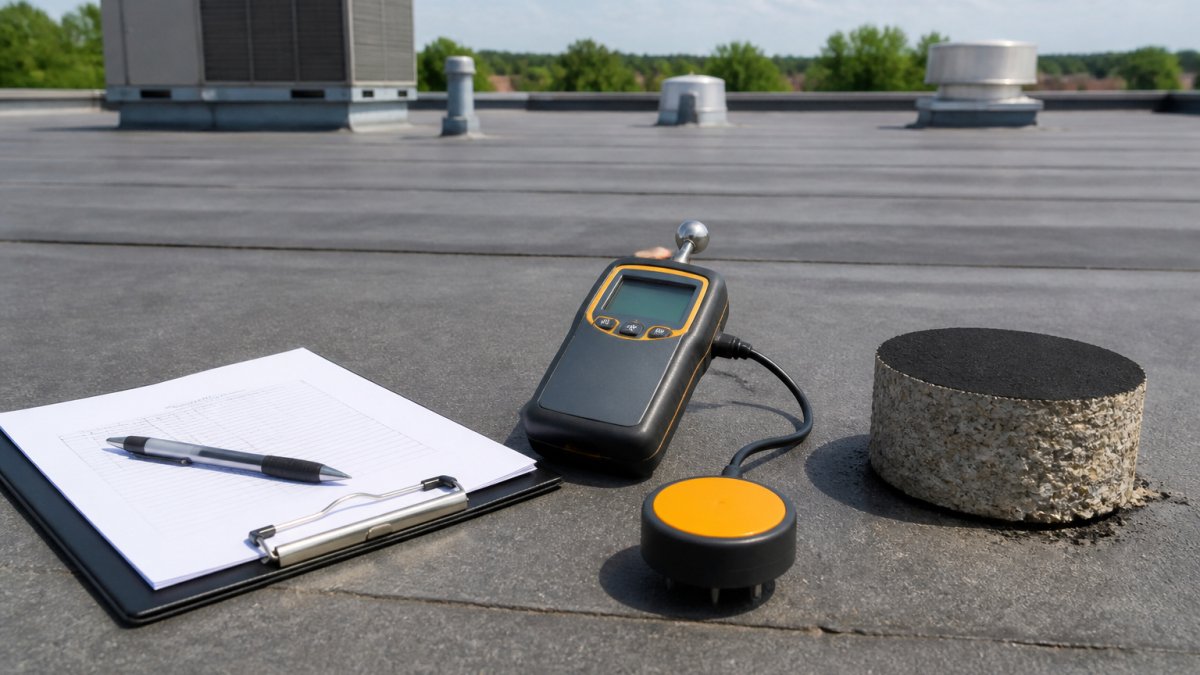
A commercial roof maintenance checklist for property managers is a repeatable set of inspection tasks performed on a fixed schedule, with written findings for every building. The checklist matters less than the discipline of running it.
Monthly and Quarterly Inspection Tasks
Monthly walkthroughs catch the obvious problems. Quarterly inspections catch the ones that develop slowly.
Monthly (or after any significant storm):
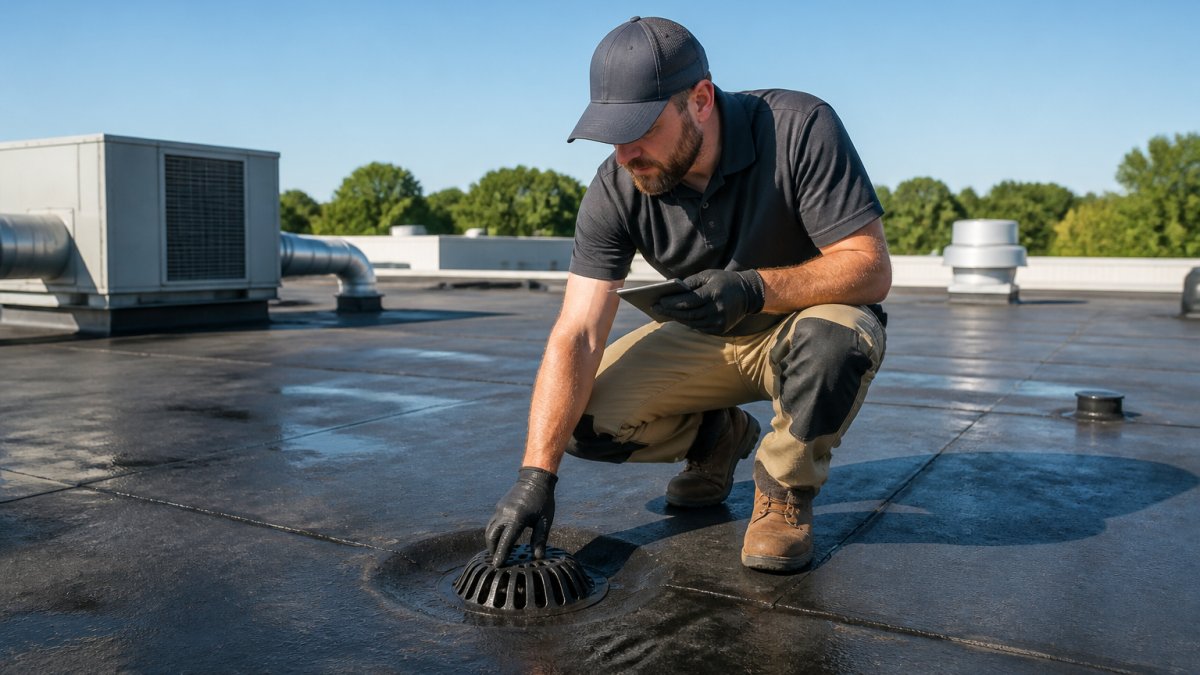
- Check roof drains and scuppers for debris blockage
- Look for ponding water that persists more than 48 hours
- Inspect for new punctures, blisters, or open seams
- Confirm rooftop unit flashings are intact
- Note any interior ceiling stains that appeared since the last visit
Quarterly:
- Inspect all penetration flashings and pipe boots
- Check membrane terminations at parapet walls
- Examine expansion joints for cracking or separation
- Review roof hatch and access ladder condition
- Photograph and log every finding by building
Keep one file per building. Dated photos of a deteriorating seam do more for a capital request than any written summary.
How a Commercial Roofing Preventative Maintenance Agreement Works
A commercial roofing preventative maintenance agreement is a contract that sets inspection frequency, response times, and repair scope for a defined period, usually with a fixed annual fee. It converts unpredictable repair spending into a known line item, but its value comes down to how the contract is structured.
What to Expect in a Service Agreement
Terms vary, but a sound agreement covers scheduled inspections at defined intervals, a documented report after each visit, priority response for leaks with a stated time window, and a clear division between covered and separately billed work.
Two clauses deserve close reading. First, the response-time commitment: "priority scheduling" means nothing without a number attached. Second, warranty language, if a manufacturer's roof warranty requires periodic maintenance, your agreement should produce the documentation that satisfies it.
A common mistake is signing an agreement that only covers inspection. Inspection without repair authority just generates a list of problems you still have to schedule separately.
Contract Structures: Full-Coverage vs. Inspection-Only
Most maintenance agreements fall into one of two structures. Inspection-only covers scheduled visits and reporting but bills every repair separately. Full-coverage bundles inspections, routine repairs, and sometimes emergency labor into a fixed annual fee.
Warranty Compliance and Documentation
Manufacturer warranties on commercial roof systems typically require periodic maintenance to remain valid. Miss the required inspections, and a hail claim or membrane failure that would have been covered becomes your expense.
Insurance Claim Advocacy: The Angle Most Guides Miss
When a large multifamily property sustains storm damage, hail, wind, or a major leak event, the repair is often an insurance claim, not a maintenance item. This is where most property managers lose money: not on the repair, but on the claim.
Flat Roof Repair for Multi-Family Buildings
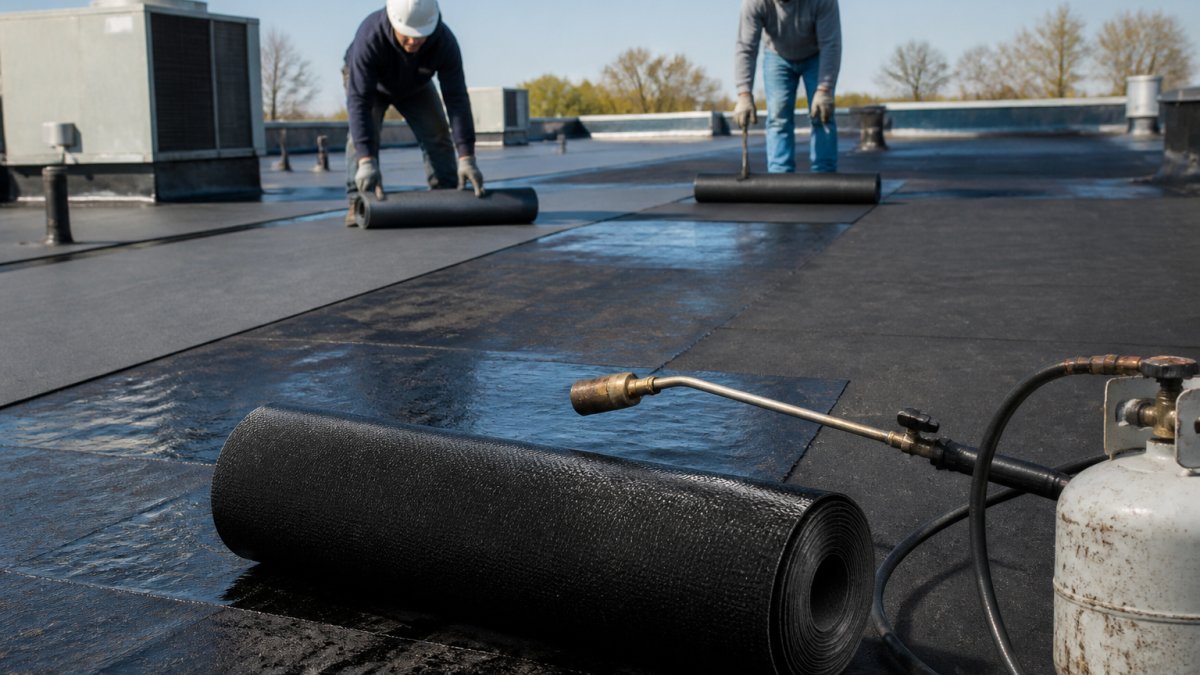
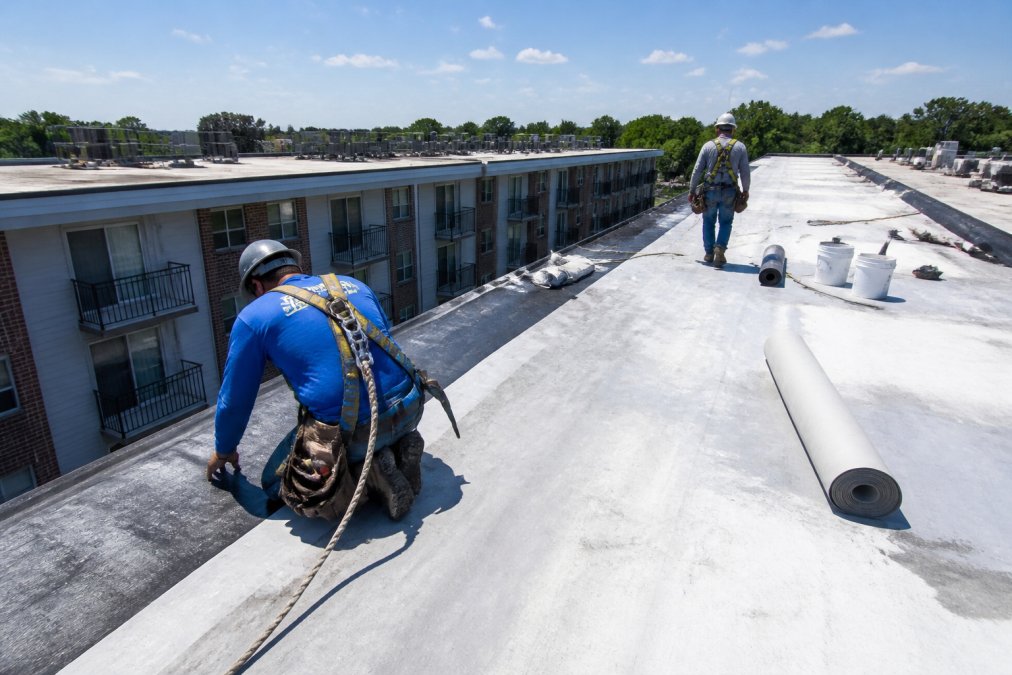
Flat roof repair for multi-family buildings is complicated by the people underneath it. Apartment complex roofing and HOA roofing projects involve residents, common areas, and schedules that cannot simply be shut down.
Vendor Vetting Criteria for Commercial Roofing Contractors
Vendor vetting is where portfolios are protected or exposed. A commercial roofing contractor who is excellent on one building may lack the capacity to service twelve across a service area.
| Criteria | What to Verify | Why It Matters |
|---|---|---|
| Commercial-only focus | Portfolio of similar buildings | Residential experience does not transfer to flat roof systems |
| Capacity | Crew count and service radius | One-off shops cannot sustain multi-property schedules |
| Documentation | Sample inspection reports | You need records for budgeting and warranty compliance |
| Response commitment | Written response-time terms | "Priority" without a number is unenforceable |
| References | Buildings with prior leak history | Ask specifically whether the leaks stayed fixed |
Budgeting and Capital Expenditure Planning Across Multiple Properties
Capital expenditure planning for roofing works backward from replacement. If a roof has a known remaining service life, you can schedule its replacement into a future budget year instead of absorbing it as a surprise.
Emergency Leak Response and Storm Damage Assessment
Emergency leak response starts with containment, not repair. When water is entering a building, the first priority is protecting inventory, equipment, and tenant spaces. Permanent repair comes after the source is confirmed.
A workable emergency protocol has four stages:
- Contain - move or cover exposed assets, place containment under active drips
- Document - photograph the interior damage and the roof condition before anything is altered
- Diagnose - trace the leak to its actual entry point, which is often not directly above the stain
- Repair - make the permanent fix, then verify with a water test
Digital Asset Management: Drone Imagery and Roof Reports
Most property managers still track roof conditions through paper files and email threads. That approach breaks down across a portfolio of ten or more buildings, where a leak at one property can look identical to a leak at another in last year's notes.
Storm Damage Assessment for Insurance Claims
After a major storm event, the assessment process determines whether you file a claim and how much it is worth. A few practices make the difference:
- Document before you repair. Once a crew patches a damaged section, the evidence of the original damage is gone. Photograph everything first.
- Record dates and times. Insurance policies have claim windows. A dated record establishes when the damage occurred.
- Separate storm damage from maintenance issues. Adjusters deny claims for damage they attribute to deferred maintenance. A maintenance history helps prove the roof was in good condition before the storm.
- Get a scope-of-loss estimate from a roofing contractor, not just the adjuster. The adjuster's estimate reflects the insurer's interest. A contractor's estimate reflects the actual cost to restore the roof to code.
When to Escalate to Emergency Response
Not every leak requires an emergency call. A slow drip in a utility closet during a rainstorm can wait for a scheduled repair. But some conditions justify immediate response:
- Water is threatening electrical systems or elevator equipment
- A section of roof membrane has peeled back or blown off
- Water is entering multiple tenant units simultaneously
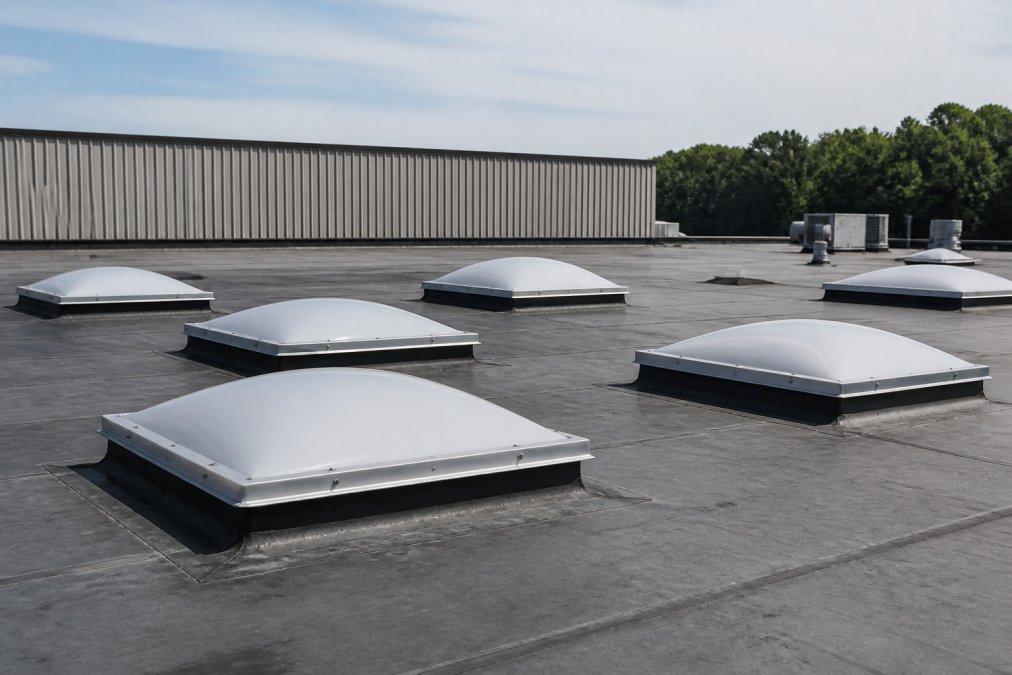
- The leak is near a skylight or roof hatch and compromising safety
Frequently Asked Questions
What should property managers look for in commercial roofing services?
Look for a contractor with specific commercial flat roofing experience, not just residential. Verify they carry proper licensing, insurance, and manufacturer certifications. Ask for references from similar properties, such as multi-family or retail centers. Confirm they offer documented inspections, written estimates, and preventative maintenance agreements. A dedicated commercial roofing contractor should also explain their diagnostic process and involve you in project decisions rather than just handing you a repair bill.
How often should multi-family roofs be inspected?
Most commercial flat roofs benefit from at least two inspections per year, typically in spring and fall. Properties with heavy foot traffic, rooftop HVAC units, or a history of leaks may need quarterly checks. After any major storm, schedule an assessment within days to catch damage before it spreads. Regular inspections are a core part of any commercial roof maintenance checklist for property managers and help you catch small issues before they become capital expenses.
What are the benefits of a proactive roof maintenance program?
A proactive maintenance program extends roof lifespan, reduces emergency repair calls, and helps you plan capital expenditure more accurately. Instead of reacting to leaks, you address small problems like sealant failure or drain clogs before they cause interior damage. Documented maintenance also supports warranty compliance, since most manufacturers require regular upkeep to honor coverage. For property managers overseeing multiple buildings, a single preventative maintenance agreement can standardize service across the entire portfolio.
How do you manage roofing repairs across multiple properties efficiently?
Consolidate under one commercial roofing contractor who can handle phased scheduling across your portfolio. Request a single point of contact, standardized inspection reports, and a shared documentation system so you can track roof lifecycle data for every building. Group repairs by priority and budget cycle rather than treating each property as an isolated job. This approach reduces vendor management overhead and gives you consistent service quality across all locations.