 ultimate-guide
Commercial Roof Maintenance Cost 2026: What to Budget
Table of Contents
- What Drives Your Commercial Roof Maintenance Cost in 2026
- Commercial Roof Inspection Checklist: What to Verify Before You Pay
- Preventative Roof Maintenance vs Reactive Repair: A Cost Comparison
- Commercial Roof Lifespan Extension Strategies That Protect Your Budget
- Roof Replacement vs Restoration: Where the Money Goes
- How to Build an Annual Commercial Roof Maintenance Budget
- Selecting a Commercial Roofing Partner in 2026
- Frequently Asked Questions
Last Updated: September 28, 2026
What Drives Your Commercial Roof Maintenance Cost in 2026
Commercial roof maintenance cost in 2026 is not a single number. It is the sum of your roof system, its age, its square footage, and market conditions for materials and labor. This guide from American Environmental Services breaks down each variable so you can build a defensible budget.
The biggest mistake facility managers make is treating maintenance as an emergency line item. Reactive spending always costs more than planned spending.
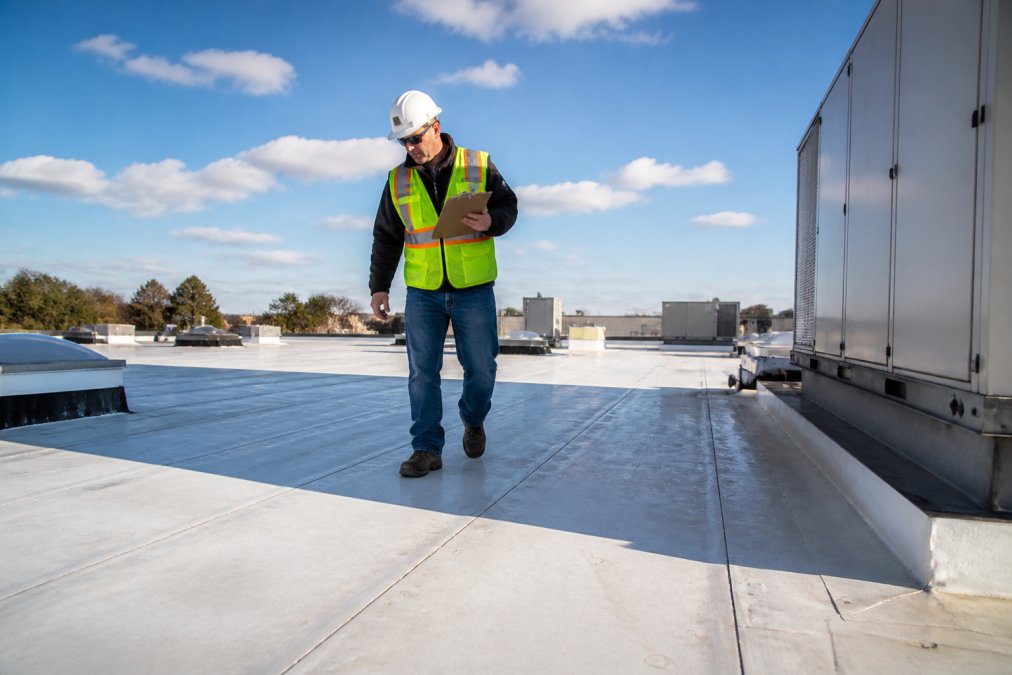
Roof System Type and Square Footage
Flat roof systems behave differently, and that changes what maintenance requires. TPO membrane is common on warehouses and retail centers because seams can be heat-welded and repaired in sections. Built-up roofing (BUR) uses layered felt and bitumen, so repairs are more labor-intensive and often require matching aged materials. Metal panel systems demand fastener and coating checks rather than membrane patching.
Square footage sets the baseline: a larger roof means more seams, drains, penetrations, and inspection hours. Two identical buildings can still carry different costs if one has heavy rooftop equipment.
Material Inflation and Tariffs
Material inflation and tariffs have reshaped commercial roofing economics. Membrane resins, insulation boards, and metal coil pricing all move with commodity and trade conditions, and those increases pass through to maintenance and repair line items. Lock in service agreements with defined pricing where you can, and expect repair quotes to be re-validated more frequently than five years ago.
Commercial Roof Inspection Checklist: What to Verify Before You Pay
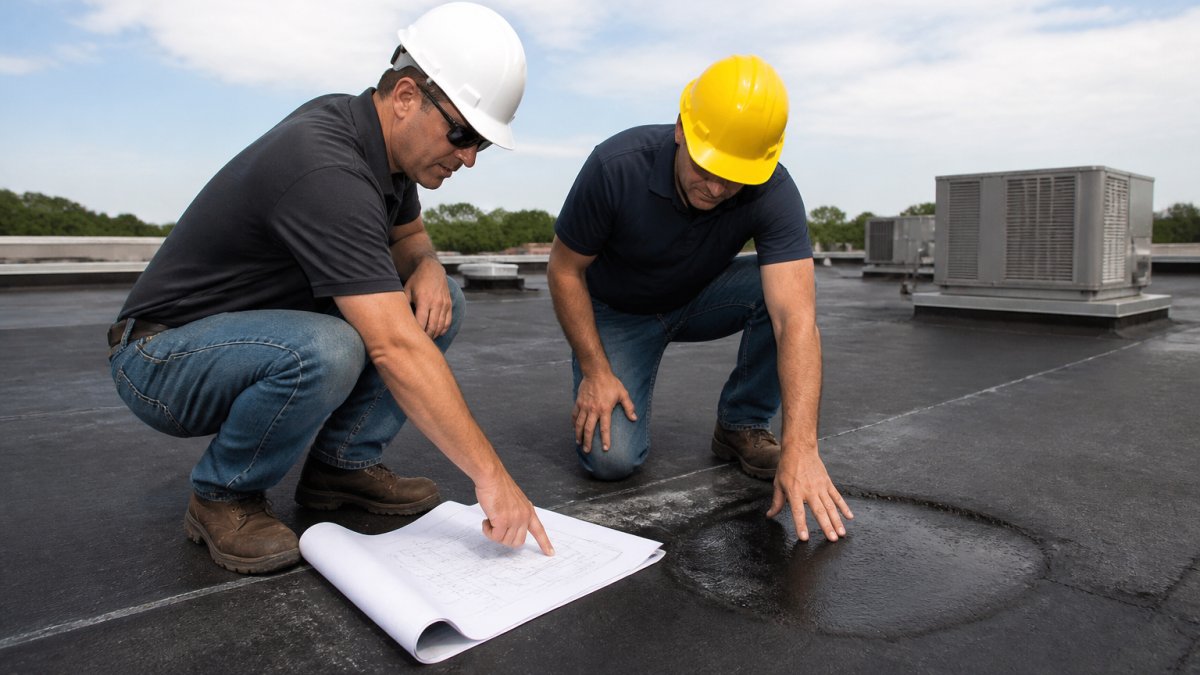
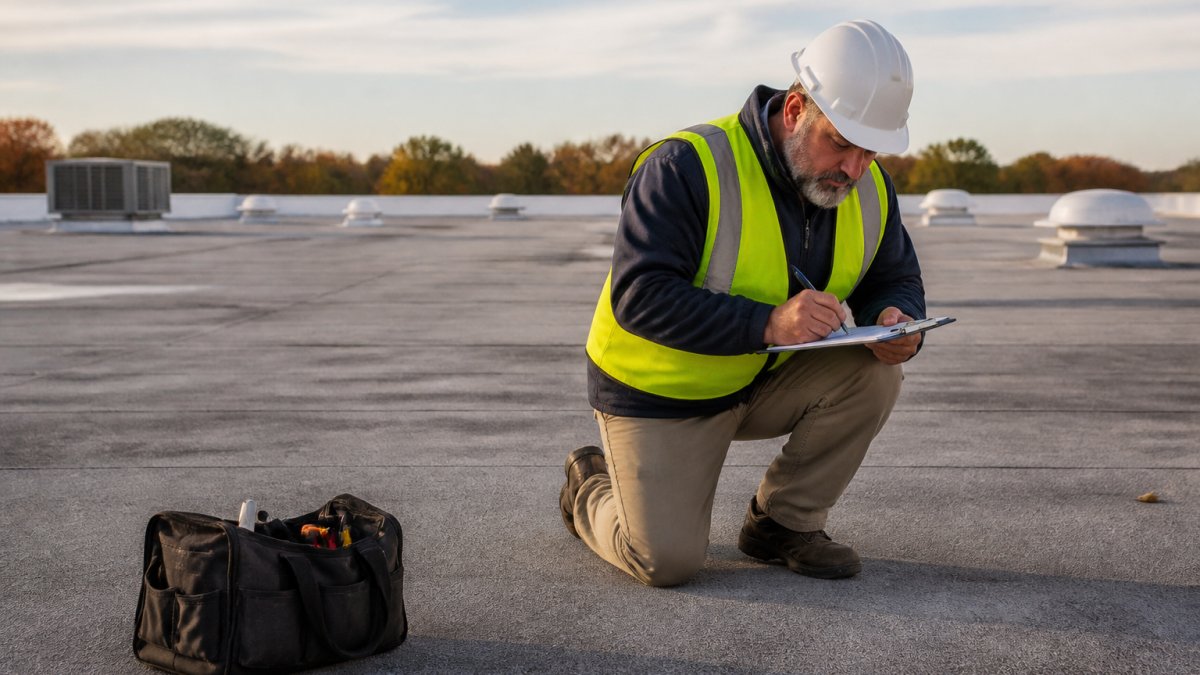
A commercial roof inspection checklist is the single most effective tool for controlling cost. It turns a vague "the roof is fine" into documented conditions you can compare year over year.
Before you authorize any invoice, verify these items:
- Membrane integrity: check for punctures, blisters, open seams, and shrinkage at edges
- Flashing and terminations: inspect wall flashings, curbs, and counterflashings for separation
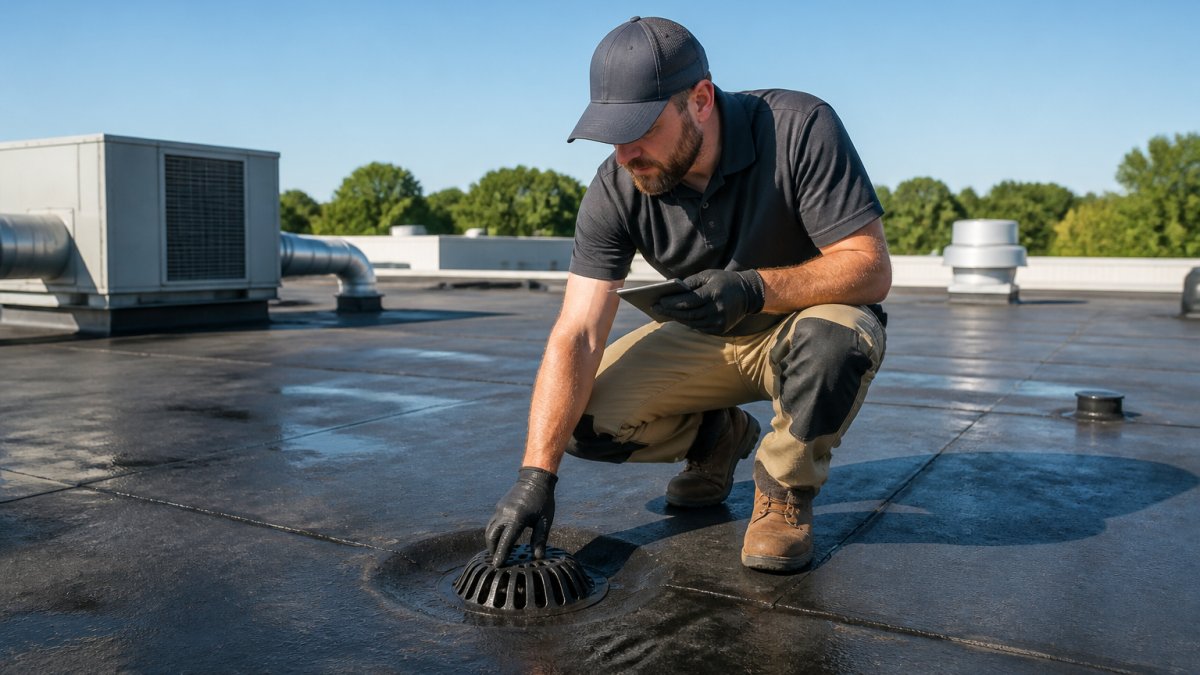
- Drainage: confirm drains, scuppers, and gutters are clear and ponding clears within 48 hours
- Penetrations: examine pipe boots, HVAC curbs, and conduit supports for cracked sealant
- Fasteners and edges: look for backing-out screws and lifted edge metal
- Structural assessment: note any sagging, deflection, or interior staining that suggests deck issues
- Photo documentation: require dated photos of every deficiency, not just a written summary
Preventative Roof Maintenance vs Reactive Repair: A Cost Comparison
Preventative roof maintenance vs reactive repair is not a close contest over a roof's lifecycle. Proactive programs catch small failures; reactive work waits for water to find its way inside.
| Approach | Typical Trigger | Scope of Work | Budget Impact |
|---|---|---|---|
| Preventative maintenance | Scheduled inspections | Seam repair, coating, drainage clearing | Predictable, spread across the year |
| Reactive repair | Reported leak or damage | Emergency repairs, interior remediation | Unpredictable, often bundled with asset damage |
The real difference shows up in roof lifecycle. A roof maintained on a schedule tends to reach the far end of its expected service life; one repaired only after failures often gets replaced years early.
The Deferred Maintenance Trap
Deferred maintenance is the quiet cost driver. Every skipped inspection lets a minor seam failure become saturated insulation, which cannot be dried in place. Once moisture spreads, the repair scope expands from a patch to a full section tear-off, and capital expenditure balloons.
Commercial Roof Lifespan Extension Strategies That Protect Your Budget
Commercial roof lifespan extension strategies fall into three buckets: keep water moving, keep seams sealed, and keep records.
- Schedule inspections twice a year, plus after any major storm
- Clear drains and scuppers before and after storm season
- Repair seams and flashing immediately, not at the next budget cycle
- Apply reflective coatings where the existing membrane is sound but aging
- Track repairs by location to spot recurring problem zones
Roof restoration, cleaning, seam reinforcement, and a coating system, can add years to a sound membrane at a fraction of replacement scope.
Roof Replacement vs Restoration: Where the Money Goes
Roof replacement vs restoration comes down to the condition of what is under the membrane. Replacement removes the existing system, replaces insulation and possibly decking, and installs new membrane. Restoration keeps the existing assembly and rebuilds its weather resistance. The cost difference depends on how much of the existing assembly can be saved.
The 2026 Material Environment
Material inflation and tariffs affect replacement and restoration differently. Replacement is more exposed to commodity swings because it consumes more new material per square foot. Restoration is less exposed on material but more exposed on labor, since surface preparation and coating application are labor-intensive.
Deferred Maintenance and the Capital Budget
Deferred maintenance is the quiet cost driver and the bridge between the maintenance budget and the capital budget. Every skipped inspection lets a minor seam failure become saturated insulation, which cannot be dried in place. Once moisture spreads, the repair scope expands from a patch to a full section tear-off, and capital expenditure balloons.
How to Build an Annual Commercial Roof Maintenance Budget
An annual commercial roof maintenance budget starts with your roof inventory, not a percentage rule. List every roof, its system type, age, and square footage, then assign each an inspection frequency and a repair reserve. The goal is a number you can defend line by line.
A workable structure looks like this:
- Baseline service agreement: scheduled inspections and minor repairs for every roof
- Repair reserve: a set-aside for deficiencies found during inspections
- Capital planning line: projected replacement or restoration year for each roof
- Contingency: an emergency repairs allowance for storm events
Tax Implications and Depreciation
Tax treatment separates routine maintenance from capital improvements, and the distinction changes your true cost of ownership. Repairs that keep a roof in working order, patching a seam, resealing a flashing, clearing a drain, are generally deductible in the year incurred. A replacement or major restoration is typically capitalized and depreciated over its useful life, spreading the deduction across years.
Insurance Premium Reduction Strategies
Insurance premium reduction strategies are the most overlooked line in a roofing budget. Carriers price risk, and a documented maintenance program with inspection records signals a well-managed asset. Property managers who can produce dated inspection reports and completed repair logs are in a stronger position at renewal.
Selecting a Commercial Roofing Partner in 2026
Selecting a commercial roofing partner comes down to diagnosis, not price. The cheapest quote is often the one that patches a symptom and returns next season.
Use this checklist before you sign:
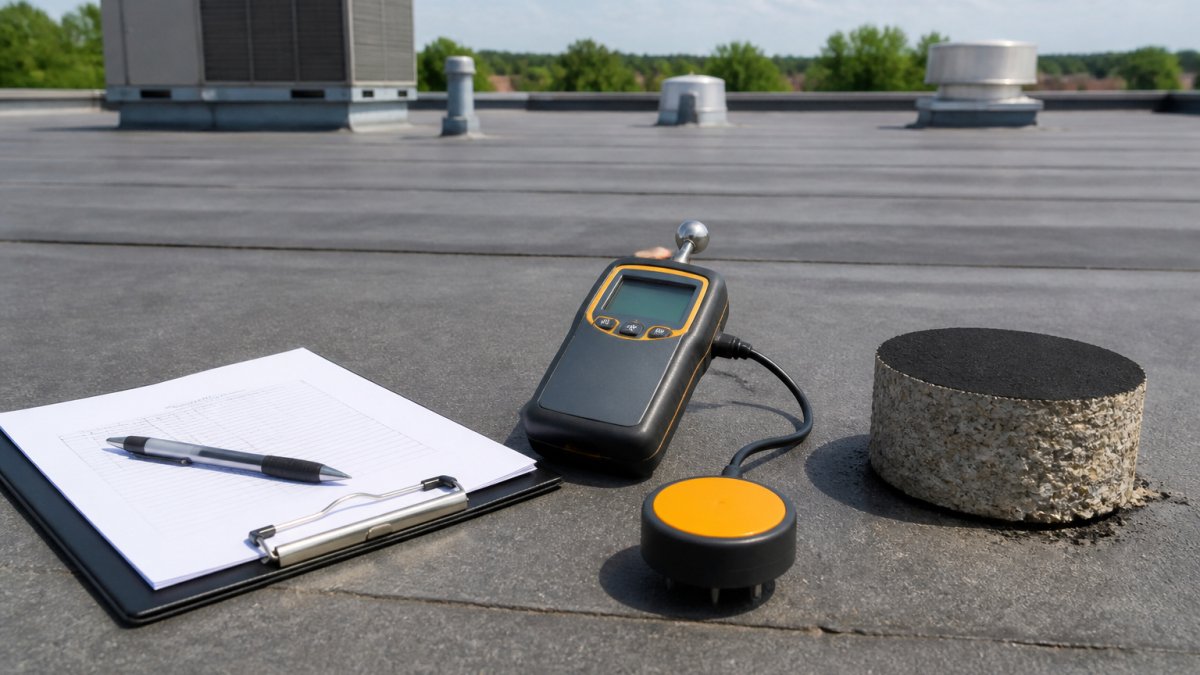
- Do they perform moisture surveys and core cuts before recommending replacement?
- Will they walk you through findings with photos, not just a summary?
- Can they service multiple properties on a consistent schedule?
- Do they offer a written preventative maintenance program?
- Can they provide references from buildings with similar systems and usage?
- Will they work around operating hours for facilities that cannot shut down?
Frequently Asked Questions
How much does a yearly roof maintenance inspection cost for a commercial roof?
Inspection pricing depends on roof size, system type, and accessibility. A single-story retail building with a simple TPO membrane costs less to inspect than a multi-level warehouse with complex penetrations. Most contractors bundle inspections into a service agreement, which spreads the cost across the year and includes minor repairs. Request a quote from a commercial roofing specialist to get pricing tailored to your building's square footage and roof system.
What factors influence commercial roof maintenance pricing in 2026?
Square footage, roof system type (TPO, metal panel, built-up roofing), accessibility, and material inflation all affect pricing. Roofs with heavy HVAC equipment, skylights, or poor drainage require more labor. Tariffs on imported roofing materials have pushed membrane and insulation costs higher. Maintenance frequency also matters: quarterly service agreements cost more upfront than annual visits but catch small issues before they become emergency repairs.
Does regular maintenance actually extend the life of a flat roof?
Yes. Preventative maintenance addresses membrane integrity, sealant degradation, and drainage issues before they cause leaks. A flat roof that receives regular inspections and prompt repairs consistently outlasts one that only gets attention after water intrusion starts. The key is documenting conditions over time so you can track deterioration and plan capital expenditure rather than reacting to failures.
What is the 25% rule for roofing?
The 25% rule is a budgeting guideline suggesting that if repair costs exceed roughly a quarter of replacement cost, replacement may be the better financial decision. It is not a hard rule. A roof with good structural assessment results but localized damage may still benefit from restoration. Conversely, a roof nearing the end of its lifecycle with widespread membrane failure rarely justifies repeated repairs.
Roofing budgets fail when maintenance is treated as an afterthought and capital planning is treated as a surprise. American Environmental Services builds proactive maintenance programs that extend roof lifespan, resolve leaks at the source, and keep your facility protected against environmental wear. Request a quote and get an inspection-based plan for your flat roof system.