 how-to
Does Preventative Roof Maintenance Really Work?
Table of Contents
- Does Preventative Roof Maintenance Really Work? The Honest Answer
- What Preventative Maintenance Can and Cannot Prevent
- How to Judge Whether the Expense Is Worth It
- Commercial Roof Inspection Frequency: How Often Is Often Enough?
- What Belongs on a Commercial Roof Inspection Checklist
- DIY Inspection vs. Professional Inspection
- Building a Preventive Roof Maintenance Program That Fits Your Roof Type
- Commercial Roof Leak Prevention: What Actually Stops Water From Getting In
- Frequently Asked Questions
Last Updated: October 5, 2026
Does Preventative Roof Maintenance Really Work? The Honest Answer
Yes, preventative roof maintenance works, but not in the way most building owners expect. It slows wear, catches small problems early, and adds years to a flat roof's service life. It does not make a failing roof last forever.
At American Environmental Services, we have spent over 20 years diagnosing commercial roofs, and the pattern is consistent: buildings on a real maintenance program avoid the emergency calls that wreck a budget. The catch is that "maintenance" has to mean scheduled inspections and repairs, not a patch slapped on after a leak appears.
Below, we break down what maintenance can and cannot prevent, how often to inspect, and how to tell if the spend is worth it.
What Preventative Maintenance Can and Cannot Prevent
Preventative maintenance is a scheduled program of inspections, cleaning, and small repairs designed to stop minor issues from becoming major failures. It targets the slow damage that quietly builds on every flat roof.
Failures Maintenance Prevents
- Clogged drains that back water up across the membrane
- Split seams and open flashing before they leak
- Blistering and ponding that rot insulation over time
- Small punctures from foot traffic and dropped tools
- Debris buildup that traps moisture against the surface
Failures No Maintenance Program Can Stop
Some problems are beyond saving. A membrane past its service life will fail no matter how often you clean it. Storm damage, structural movement, and design flaws also sit outside what maintenance can fix. When a roof is at the end of its life, no amount of patching changes the math.
How to Judge Whether the Expense Is Worth It
Most building owners never run the math. They react to leaks, pay whatever the emergency invoice says, and repeat the cycle until the roof is replaced early. The honest way to judge whether preventative maintenance is worth it is to compare what you spend on maintenance against what you avoid in reactive repairs and premature replacement.
A simple framework helps. Track three numbers over a few years:
- Annual maintenance spend on inspections and small repairs
- Emergency repair costs you avoided or paid
- Years of service life you gained before replacement
If maintenance keeps emergency calls rare and pushes replacement out by several years, it pays for itself. If you are still calling a contractor every few months, the roof is past saving and the program is just delaying the inevitable.
What the Evidence Actually Shows
No two roofs are identical, so no single study proves maintenance always pays. But the pattern across commercial portfolios is consistent. Roofs on scheduled programs tend to reach the upper end of their manufacturer-rated service life, while neglected roofs often fail years early. The mechanism is straightforward: small repairs cost a fraction of emergency tear-offs, and catching a failed seam before water reaches insulation prevents the interior damage and mold remediation that drive the biggest invoices.
A common pattern practitioners see is that a roof with a documented maintenance history avoids the mid-life crisis replacement that catches owners off guard. Instead of a surprise capital expense, the roof is replaced on a planned schedule when it genuinely reaches the end of its service life.
The Realistic Test
Ask yourself three questions:
- Are emergency calls becoming rarer or more frequent?
- Is the roof still within its expected service life?
- Does the maintenance provider document every visit with photos and notes?
If the answers point to a stable or improving roof, the program is working. If the roof is failing in multiple areas at once, no amount of patching changes the math. That is when replacement usually costs less over five years than repeated repairs.
That is the test we recommend to every property manager. It removes the guesswork and shows whether the spend is doing its job.
Commercial Roof Inspection Frequency: How Often Is Often Enough?
Most flat commercial roofs need a professional inspection at least twice a year, plus a check after any major storm. High-traffic roofs, or those with heavy equipment on top, often need quarterly visits. But the right frequency depends on the roof system itself, its age, and the climate it faces.
A Practical Schedule by Roof Type
Different membranes wear differently. Here is how to set intervals for the most common flat roof systems:
| Roof Type | Typical Inspection Frequency | Key Tasks |
|---|---|---|
| TPO / PVC (single-ply) | Twice a year, quarterly if heavy traffic | Check seams, look for punctures, clean drains |
| Modified Bitumen | Twice a year | Inspect surface granules, flashing, and seams |
| Built-Up Roof (BUR) | Twice a year | Verify gravel/coating integrity, check for blisters |
| Metal | Twice a year | Check fasteners, sealants, and coating condition |
How Climate and Age Change the Schedule
Roofs in regions with freeze-thaw cycles, heavy snow, or intense sun need more frequent checks. A roof over 15 years old should move to quarterly inspections regardless of type, because materials weaken with age. After any major storm, inspect within days, wind and hail damage often hides in seams and flashings.
The Unique Angle: Why Generic Advice Fails
Most articles tell you to inspect twice a year and stop there. That ignores the reality that a TPO membrane on a clean warehouse has different needs than a modified bitumen roof with HVAC units and ponding history. The schedule above accounts for roof type, age, and climate, the three factors that actually determine when maintenance pays off.
Here is a practical schedule by situation:
| Roof Situation | Inspection Frequency | Why |
|---|---|---|
| New roof, light use | Twice a year | Catch early wear before it spreads |
| Roof with HVAC equipment | Quarterly | Units and traffic cause punctures |
| Roof over 15 years old | Quarterly | Materials weaken with age |
| After any major storm | Within days | Wind and hail damage hides in seams |
| Roof with ponding history | Monthly in wet season | Standing water speeds up decay |
The NRCA roof inspection guidance backs this approach: regular inspections catch problems while they are still cheap to fix.
What Belongs on a Commercial Roof Inspection Checklist
A commercial roof inspection checklist is the written record of everything an inspector checks on each visit. Without one, inspections become inconsistent and problems get missed.
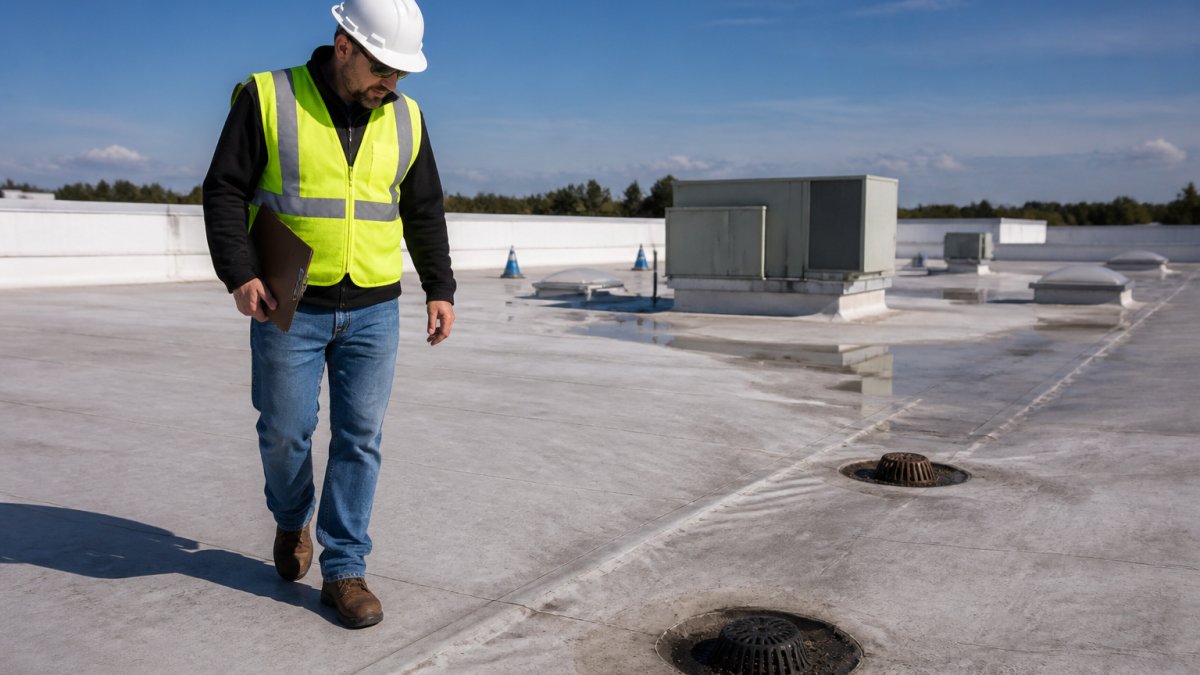
A solid checklist covers:
- Membrane surface for cracks, blisters, and splits
- All seams and flashings for separation
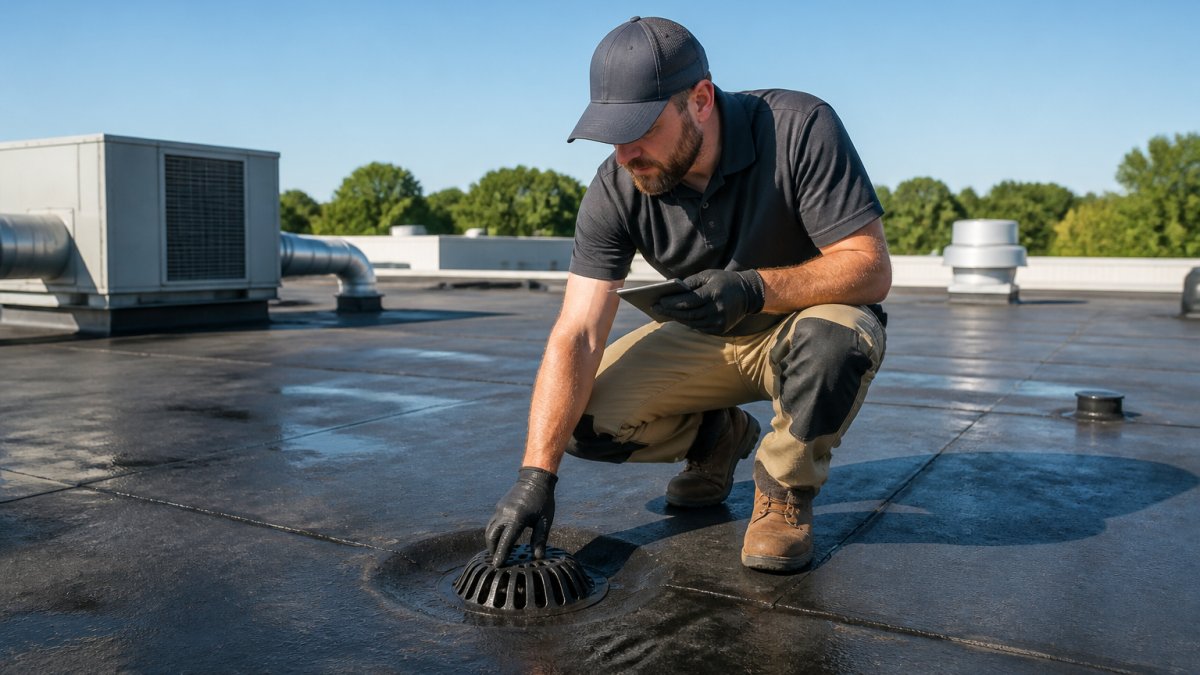
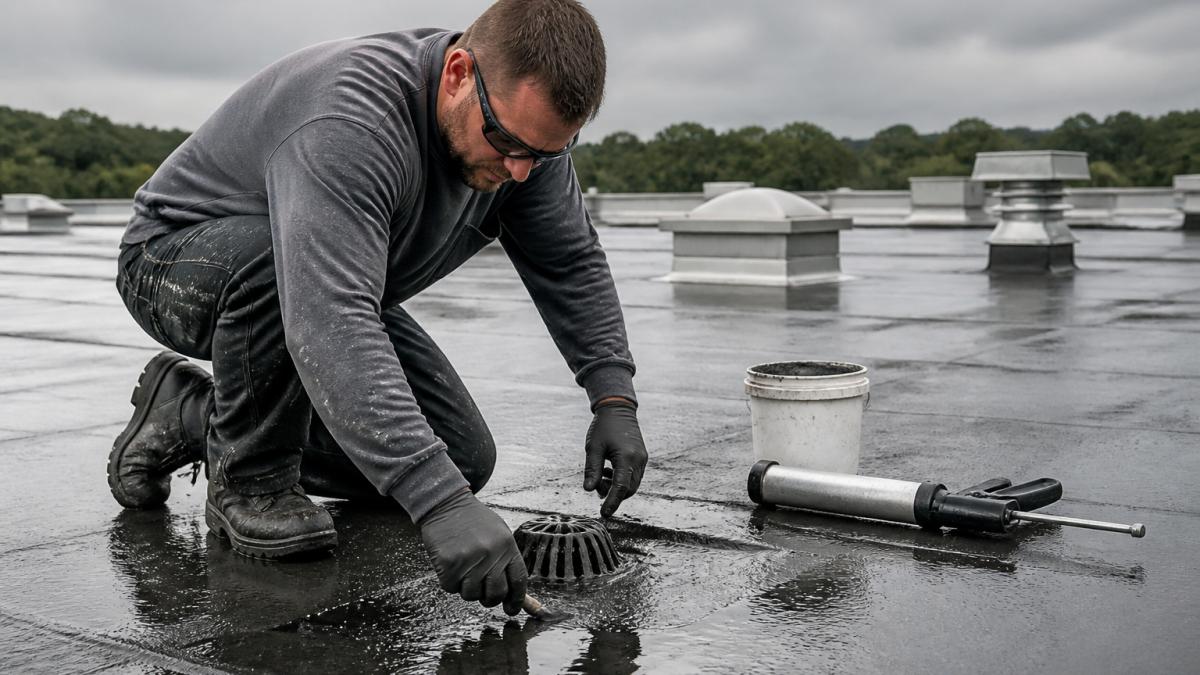
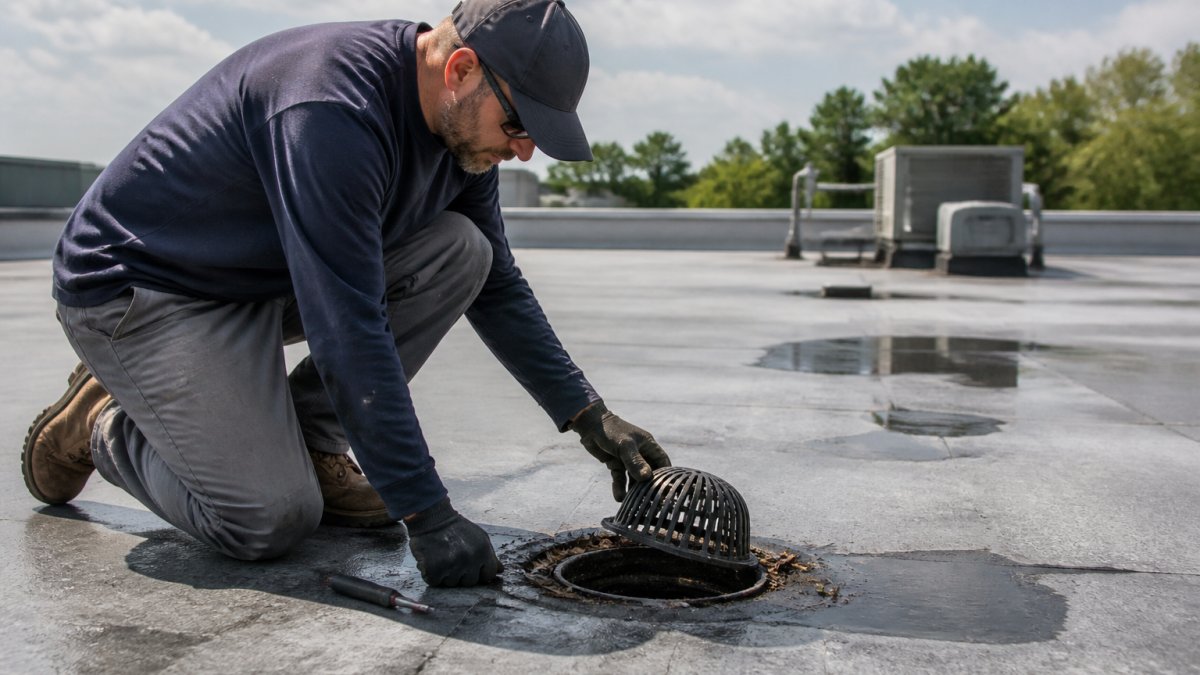
- Drains, scuppers, and gutters for blockages
- Ponding water areas after rain
- HVAC curbs and penetrations for seal failure
- Roof edges and terminations for lifting
- Interior ceilings for new water stains
- Photos and notes for every problem area
That last item matters more than most owners realize. A written inspection report with photos creates a paper trail. It documents the roof's condition over time, which helps with warranty claims and insurance.
DIY Inspection vs. Professional Inspection
Building staff can handle basic checks. Walking the roof to spot obvious debris, standing water, or visible damage takes minutes and costs nothing. That kind of routine glance is worth doing between professional visits.
What staff cannot do is diagnose what they cannot see. Membrane problems often start under the surface, at seams, or inside insulation. Catching those takes training and the right tools.
The split looks like this:
- DIY: visual checks for debris, ponding, and obvious tears
- Professional: seam testing, moisture scans, and warranty-grade documentation
One more factor: many roof warranties require professional inspections to stay valid. Skip them and you may void your coverage. For that reason alone, we recommend leaving the real inspections to a qualified contractor and using staff checks as a supplement.
Building a Preventive Roof Maintenance Program That Fits Your Roof Type
A preventive roof maintenance program is a written plan that sets inspection dates, repair triggers, and a budget line for roof care. The right plan looks different for each roof type.
TPO and PVC membranes respond well to regular cleaning and seam checks. Modified bitumen roofs need attention to surface granules and flashing. Built-up roofs benefit from keeping gravel and coatings intact. Metal roofs need fastener and coating checks.
The plan should answer four questions:
- When are inspections scheduled?
- Who does the work?
- What triggers a repair versus a replacement?
- How much is set aside each year?
Budget predictability is the real payoff. Instead of a surprise five-figure emergency, you plan for roof care the same way you plan for any other building system.
This is where a dedicated commercial contractor earns their keep. At American Environmental Services, we build maintenance programs around the specific roof system on your building, not a generic template. We involve you at every step so you know what is being done and why.
Commercial Roof Leak Prevention: What Actually Stops Water From Getting In
Commercial roof leak prevention comes down to three things: clear drainage, intact seams, and sealed penetrations. Water gets in where these three fail.
Most leaks we diagnose trace back to a blocked drain or a failed seam, not a mysterious hole. Water backs up, finds a weak point, and enters.
What actually works:
- Keep drains and scuppers clear year-round
- Repair open seams and flashing the moment they are found
- Re-seal around HVAC curbs and pipe penetrations
- Address ponding before it becomes chronic
- Fix small punctures before water reaches insulation
The GAF commercial roofing resources and OSHA walking-working surfaces standard both stress that roof access and drainage upkeep are core to protecting a building. Leak prevention is not glamorous.
If you are dealing with active water intrusion right now, the priority is diagnosis, not guessing. A trained eye finds the source fast.
Commercial roofs do not fail overnight. They fail slowly, and the warning signs are usually visible long before the first leak.
American Environmental Services has spent over 20 years helping property and facility managers across Virginia protect their buildings with proactive maintenance, accurate diagnosis, and durable repairs.
Request a quote from American Environmental Services and get a maintenance plan built for your building.
Frequently Asked Questions
Does preventative roof maintenance really work for flat roofs?
Yes, with limits. Flat and low-slope commercial roofs collect standing water, debris, and foot traffic damage that maintenance can address before it becomes a leak. Regular inspections catch open seams, clogged drains, and cracked flashing early. What maintenance cannot do is reverse a membrane that has already reached the end of its service life or fix structural deflection. The honest test is whether your roof is repairable or already past saving.
How often should a commercial roof be inspected?
Most commercial roofs need at least two inspections per year, typically in spring and fall. Add an inspection after any major storm, and schedule more frequent visits if your building has heavy rooftop equipment, trees nearby, or a history of leaks. Roofs under warranty often require documented inspections to keep coverage valid, so check your warranty terms for the minimum commercial roof inspection frequency before setting a schedule.
What problems can routine roof maintenance catch early?
Common early finds include ponding water, deteriorated sealant around penetrations, loose or lifted flashing, clogged drains and scuppers, punctures from dropped tools or foot traffic, and blistered membrane sections. Left alone, each of these can lead to water intrusion that damages insulation, ceiling tiles, and inventory. Catching them while they are still minor repairs is the entire point of a preventive roof maintenance program.
Can roof maintenance extend the life of a commercial roof?
It can, when the roof still has service life left. Cleaning debris, clearing drainage systems, and repairing minor damage reduce the wear and tear that shortens a roof's lifespan. Maintenance will not add years to a roof that is already failing, and no program can prevent every failure. A realistic expectation is that consistent upkeep helps a sound roof reach its expected service life rather than falling short of it.