 how-to
Schedule Commercial Roof Leak Repair Now: 2026 How-To
Table of Contents
- What to Have Ready Before You Schedule Commercial Roof Leak Repair Now
- Commercial Flat Roof Leak Detection: How Contractors Find the Source
- Average Commercial Roof Repair Timeline: From Call to Completion
- Minimizing Business Downtime During Emergency Roof Repair
- Temporary Patch vs. Permanent Solution: Choosing the Right Fix
- Cost Factors and Budgeting for Commercial Roof Leak Repair
- Insurance Claim Documentation Guide for Roof Leak Damage
- Commercial Roof Maintenance Checklist to Prevent the Next Leak
- Frequently Asked Questions
Last Updated: October 4, 2026
What to Have Ready Before You Schedule Commercial Roof Leak Repair Now
When water is coming through a ceiling tile, every minute of delay adds to the damage. At American Environmental Services, we have handled commercial roofing calls for over 20 years, and the buildings that get repaired fastest are the ones where the caller already has key details in hand.
The biggest mistake property managers make is calling with a vague description. "There's a leak somewhere on the roof" forces the dispatcher to guess at crew size, equipment, and timing. Specifics get a crew moving.
OSHA standards for roofing work and fall protection shape how contractors plan every job, so expect questions about roof access when you call.
Documents and Details That Speed Up Dispatch
Gather these before you dial:
- Building address and the exact suite or unit affected
- Roof type (flat, low-slope, modified bitumen, TPO, EPDM)
- Approximate roof age and any recent repair history
Questions the Dispatcher Will Ask
Expect direct questions about water flow, ceiling stains, and whether the leak is active right now, plus roof access, building hours, and whether tenants or inventory are at risk. A clear picture up front lets the contractor set a realistic arrival window instead of promising one they cannot keep.
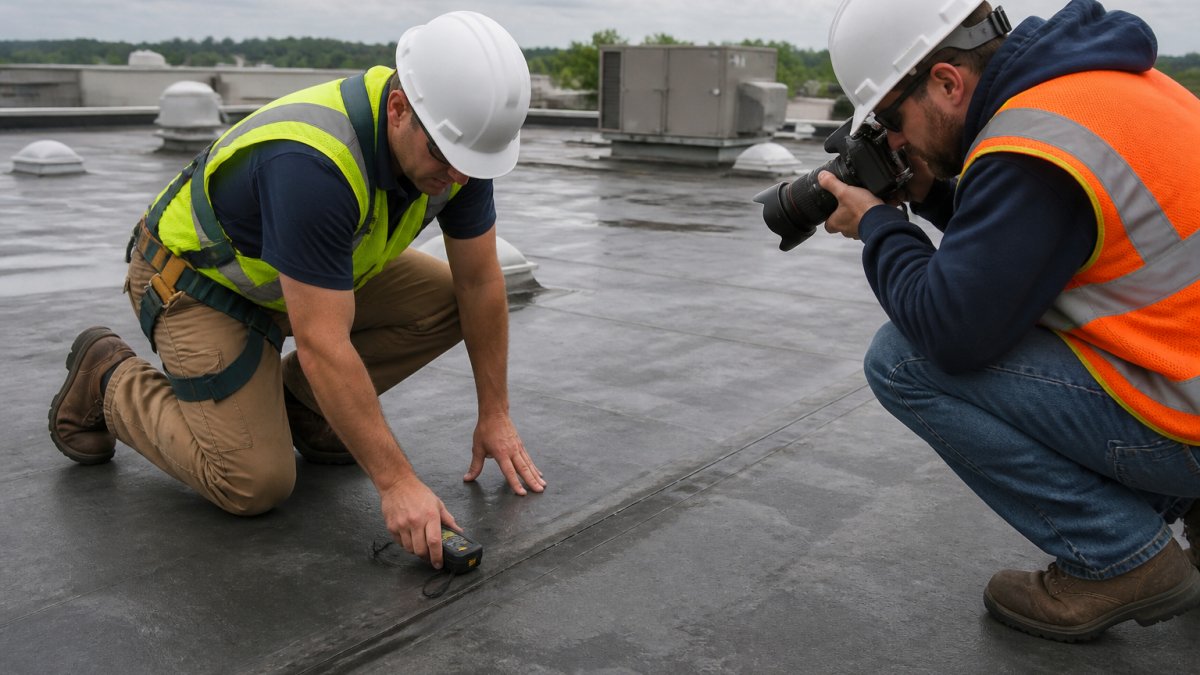
Commercial Flat Roof Leak Detection: How Contractors Find the Source
Water rarely enters where the stain appears. This is why commercial flat roof leak detection is a process, not a glance.
Contractors use several methods together:
- Visual inspection of seams, flashing, and penetrations
- Moisture meters to map saturated insulation
- Infrared imaging to spot temperature differences caused by trapped water
The goal is a confirmed source, not a best guess. Patching the wrong spot wastes budget and leaves the real breach feeding moisture into the roof assembly.
DIY Temporary Patching Techniques You Can Use Today
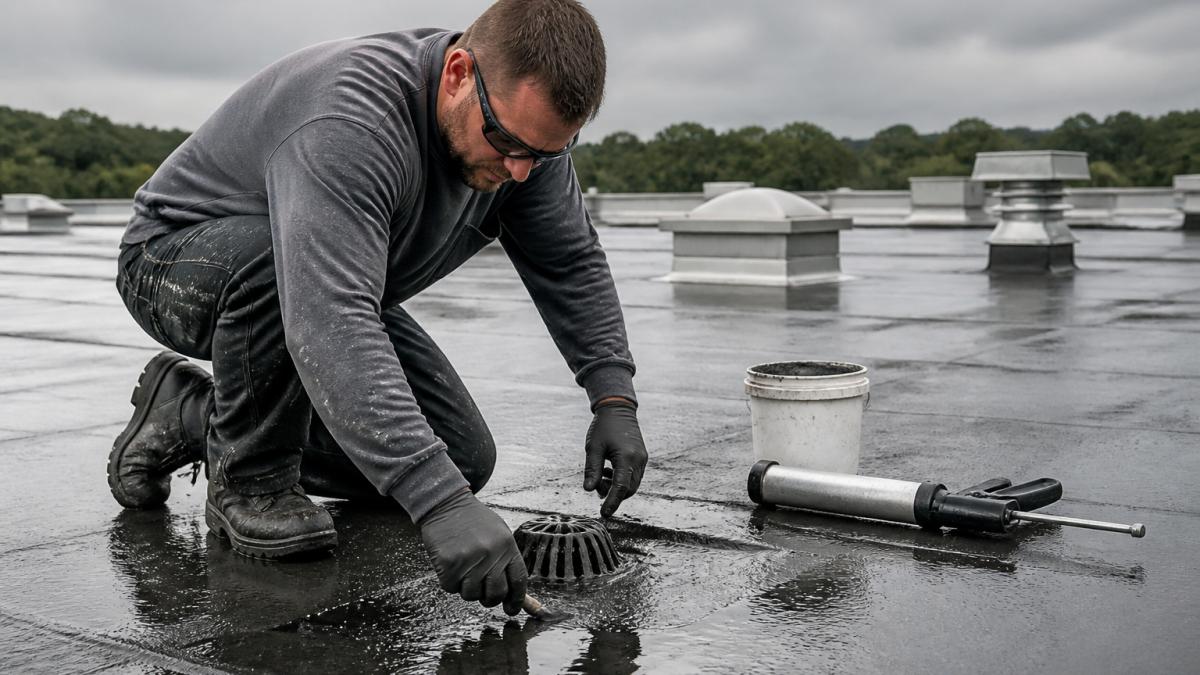
A temporary patch buys time, nothing more. For a small, visible breach on a flat membrane, clean and dry the area, then apply a compatible sealant or self-adhering patch, pressing it flat with no trapped air. Never patch over standing water or a wet surface; it will not bond.
Average Commercial Roof Repair Timeline: From Call to Completion
The average commercial roof repair timeline runs from same-day emergency response to several weeks, depending on leak severity, roof access, and material availability. Emergency tarping often happens the same day or next; permanent repairs follow once the source is confirmed and materials are on hand.
A typical sequence looks like this:
| Phase | Typical Timing | What Happens | What Drives the Duration |
|---|---|---|---|
| Emergency call | Same day | Dispatch, triage, arrival window set | Time of day, weather, crew availability |
| Assessment | Day of arrival | Leak detection, moisture mapping | Roof size, number of suspected entry points |
| Temporary protection | Same day to next | Tarping or emergency patch | Wind, rain, membrane condition |
| Permanent repair | Days to weeks | Materials ordered, crew scheduled | Material lead time, permit needs, building access |
| Verification | After repair | Water test, documentation | Weather window, drain function |
Timelines stretch when the leak source is unclear, materials must be ordered, or the building cannot close. Buildings that stay open often need phased work, which adds days but avoids shutdowns.
What Actually Compresses or Extends the Schedule
Three variables control most of the calendar:
- Material lead time. TPO and EPDM membrane rolls, cover board, and insulation are often stocked locally, so a small repair can be scheduled within days. Modified bitumen and built-up roof materials may need ordering, and specialty flashing or custom metal details can add a week or more.
- Roof access and safety setup. A flat roof with a permanent hatch, ladder, or stair access lets a crew start quickly. A roof that requires a lift, crane, or swing stage adds mobilization time and may need a separate safety plan. OSHA standards for roofing work and fall protection shape how that setup is planned.
- Building operations. A warehouse that can isolate an aisle, a retail store that can rope off a department, or an office that can shift staff all move faster than a facility that must stay fully open. Phasing around operations is the biggest schedule variable a property manager controls.
How Material Type Changes the Timeline
Different flat roof systems fail and repair differently, and that changes the schedule:
- TPO and PVC: Heat-welded seams can often be repaired the same day with membrane patches and seam welds. Fastest category when the membrane is sound.
- EPDM: Adhesive and splice tape repairs are common, but curing and bonding time can add hours.
- Modified bitumen: Torch-applied or cold-process repairs depend on dry conditions; wind and moisture can push work by a day or more.
The emergency phase happens fast; the permanent phase is where the calendar is won or lost. Property managers who approve the assessment and material order alongside the emergency call typically cut days off the timeline.
Minimizing Business Downtime During Emergency Roof Repair
Business downtime is often the property manager's real concern, not the repair itself. A warehouse losing inventory to water intrusion, or a medical facility that cannot close, needs a contractor who plans around operations rather than crew convenience.
The most effective approach is phasing. Crews work in sections, seal off work zones, and schedule disruptive steps outside peak hours; for 24-hour facilities, evening and weekend work keeps the building running.
Temporary Patch vs. Permanent Solution: Choosing the Right Fix
A temporary patch stops water now; a permanent solution corrects the cause. Choosing between them comes down to urgency, budget, and how long the roof needs to last.
The Three Questions That Decide It
- Is the leak active right now? If water is entering the building, temporary protection comes first regardless of the long-term plan, protecting inventory, ceilings, and electrical systems while the permanent scope is defined.
- Is the failure localized or systemic? A single failed seam, flashing detail, or penetration is a repair candidate. Widespread blistering, saturated insulation across multiple bays, or ponding that never drains points to a system-level problem where patching repeatedly costs more than restoring or replacing.
- How many years does the roof need to deliver? If replacement is budgeted for next year, a temporary patch is the rational bridge. If the roof has years of service left, a permanent repair protects that remaining life.
Temporary Patches: What They Can and Cannot Do
Temporary patches make sense when:
- The leak is active and damage is spreading
- Insurance or budget approval is still pending
- The roof is scheduled for replacement soon
What they cannot do is fix the cause. A patch over a failed seam does not address water already inside the roof assembly or stop moisture from migrating to a second low point, so a patch should always be paired with moisture mapping, even if the permanent repair is weeks away.
Permanent Repairs and Restoration: Matching the Fix to the Roof
Permanent repairs make sense when the roof has years of service left and the failure is localized. The right permanent fix depends on the membrane:
- TPO and PVC: Membrane patches, seam re-welds, and flashing rebuilds restore the system when the field membrane is sound.
- EPDM: Splice repairs and flashing replacement are common; larger repairs may require a cover strip and primer system.
- Modified bitumen: Granule-surfaced repairs and flashing reconstruction are typical, often with a cap sheet detail.
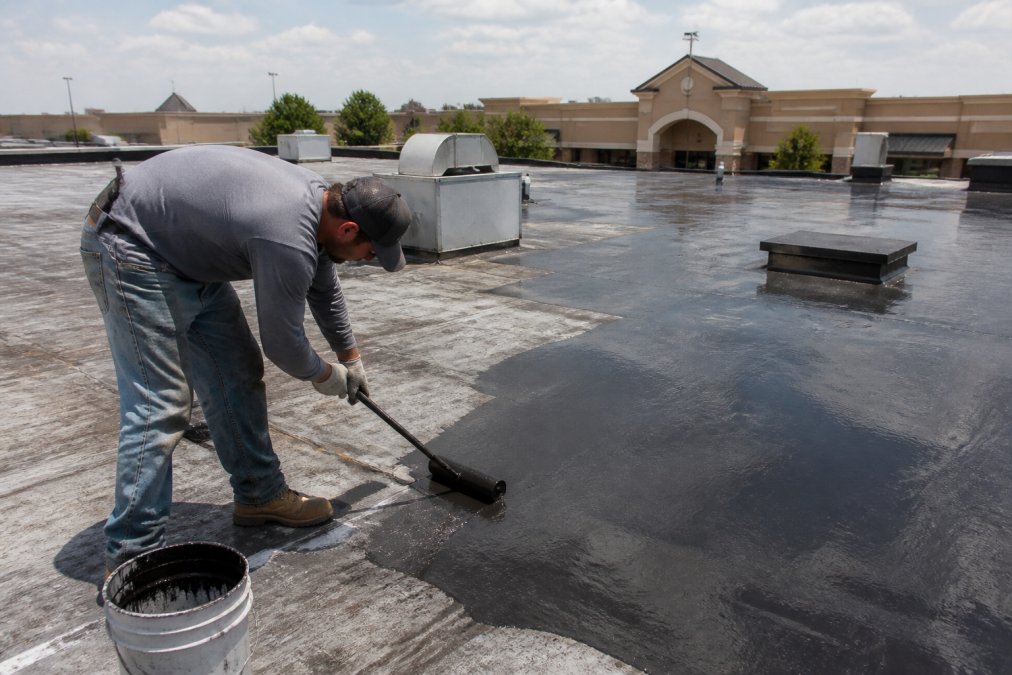
Roof restoration and coating can extend a low-slope roof's life when the membrane is sound but aging. Coatings are not a fix for saturated insulation or active leaks; they are a life-extension tool for a roof that still has structural integrity.
The Cost-of-Delay Calculation
The decision is not just patch versus repair; it is the cost of doing nothing versus acting. Water that stays in a roof assembly degrades insulation, corrodes decking, and can reach interior finishes and inventory. A temporary patch that buys two weeks is cheap compared to a ceiling collapse or mold remediation, and a permanent repair that fixes the cause is cheaper than three temporary patches over the same season.
Cost Factors and Budgeting for Commercial Roof Leak Repair
Commercial roof leak repair costs vary widely because no two roofs fail the same way. Budgeting starts with what drives the number: roof size and accessibility, extent of moisture infiltration, whether insulation is saturated, material type, and whether the repair is a patch or a restoration.
Pricing depends on scope, so get a written estimate that separates emergency work from permanent repair and spells out what is included, what is excluded, and what could change once the crew is on the roof.
Insurance Claim Documentation Guide for Roof Leak Damage
Insurance claims succeed or fail on documentation. Carriers want proof that damage came from a covered event, not deferred maintenance, and the difference often comes down to the paper trail you build in the first 48 hours.
Document these items:
- Date and time the leak was first noticed
- Photos and video of interior damage and roof conditions
- A written inspection report identifying the cause
Most policies distinguish between sudden damage and gradual deterioration, so maintenance records matter. FEMA guidance on documenting property damage for claims outlines how thorough records speed up the process. Insurance Information Institute resources on commercial property claims also explains how carriers evaluate roof damage.
Commercial Roof Maintenance Checklist to Prevent the Next Leak
The commercial roof maintenance checklist that actually prevents leaks is short, repeatable, and done on a schedule. Most flat roof failures start small: a separated seam, a clogged drain, a cracked flashing detail.
- Inspect the roof twice a year and after major storms
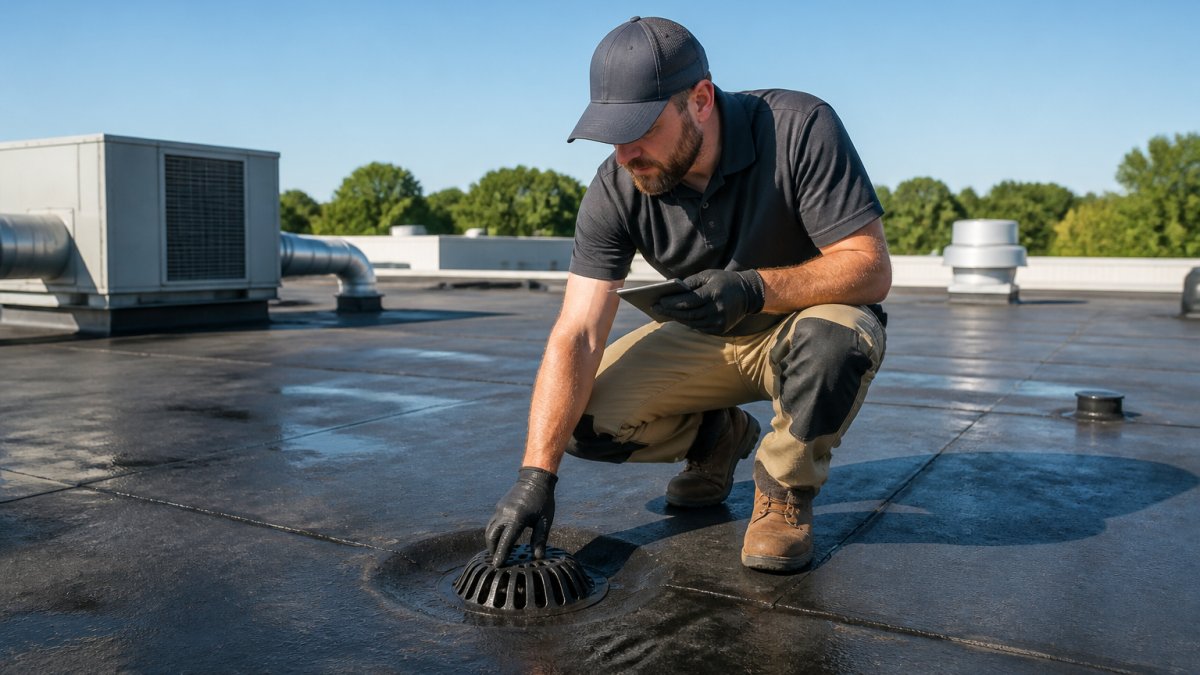
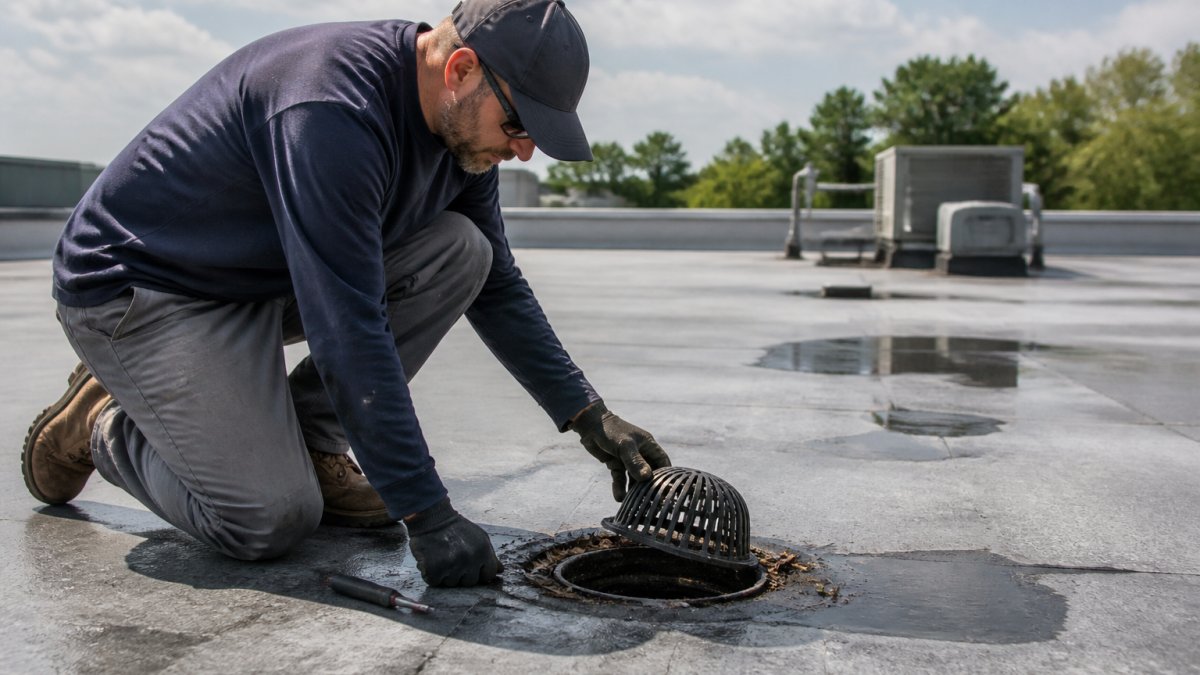
- Clear drains, scuppers, and gutters of debris
- Check seams, flashing, and penetrations for separation
Proactive maintenance programs extend roof lifespan and prevent the costly replacements that follow years of neglect. That is why we involve clients throughout the design and project phases so they understand what is happening on their roof and why.
Frequently Asked Questions
What are the first steps to take when a commercial roof starts leaking?
Move inventory and equipment away from the leak, place buckets or containment, and photograph the damage. Do not puncture the membrane to drain water. Call a commercial roofing contractor for emergency tarping and leak detection. If water is near electrical panels or skylights, evacuate that area and shut off power. Document everything with timestamps for your insurance claim. The faster you schedule commercial roof leak repair, the less water damage mitigation you will need later.
How quickly can a commercial roof leak be repaired?
Emergency tarping or temporary patching often happens the same day or within 24 hours of your call. Permanent repairs depend on the source: flashing repair or seam failure can be fixed in a few hours, while ponding water or roof drainage issues may take longer. The average commercial roof repair timeline from inspection to completion is typically one to five business days for most low-slope roofing systems, assuming materials are in stock.
How do I determine if my commercial roof needs a patch or a full replacement?
A patch or roof restoration makes sense when the leak is isolated, the insulation is dry, and the membrane has more than a few years of life left. Replacement is the better call when leaks recur across multiple areas, ponding water is chronic, or the roof assessment shows saturated insulation and structural integrity concerns. Ask your roofing contractor to show you photos and moisture readings so the recommendation is based on evidence, not sales pressure.
How does proactive maintenance prevent emergency roof repairs?
A commercial roof maintenance checklist catches small problems before they become leaks: resealing flashing, clearing drains, repairing seam failure, and removing debris. Regular roof inspections twice a year and after major storms keep the roof warranty valid and extend the membrane's lifespan. Property managers who follow a preventative maintenance program typically see fewer emergency calls and avoid the business downtime that comes with active water intrusion.
A commercial roof leak never announces itself at a convenient time, and the damage compounds with every hour of delay. American Environmental Services brings more than 20 years of dedicated commercial roofing experience, proactive maintenance programs, and diagnostic expertise to every building we serve. Request a quote and get a crew that diagnoses the real problem instead of patching symptoms.