 how-to
Flat Roof Repair for Retail Centers: A How-To Guide
Table of Contents
- Common Signs of Flat Roof Damage in Retail Centers
- Commercial Roof Leak Detection Methods
- Commercial Roof Inspection Frequency and Best Practices
- Flat Roof Maintenance Checklist for Property Managers
- Repair vs. Replacement: Making the Right Decision
- Emergency Roof Repair and Operational Impact Mitigation
- Types of Flat Roofing Systems and Their Repair Needs
- Frequently Asked Questions
Last Updated: September 27, 2026
Common Signs of Flat Roof Damage in Retail Centers
Flat roofs on retail buildings are prone to specific problems. Water damage is the most obvious sign, stains on ceilings or walls indicate moisture intrusion.
Interior Water Stains and Leaks
Water stains indicate membrane failure and often appear after rain or snow melt. Look for discoloration spreading outward from a central point; soft or spongy stains mean water has saturated the insulation below.
In retail centers, water intrusion can force tenant closures and lost revenue. Act fast when you see interior water damage.
Visible Membrane Separation and Flashing Failure
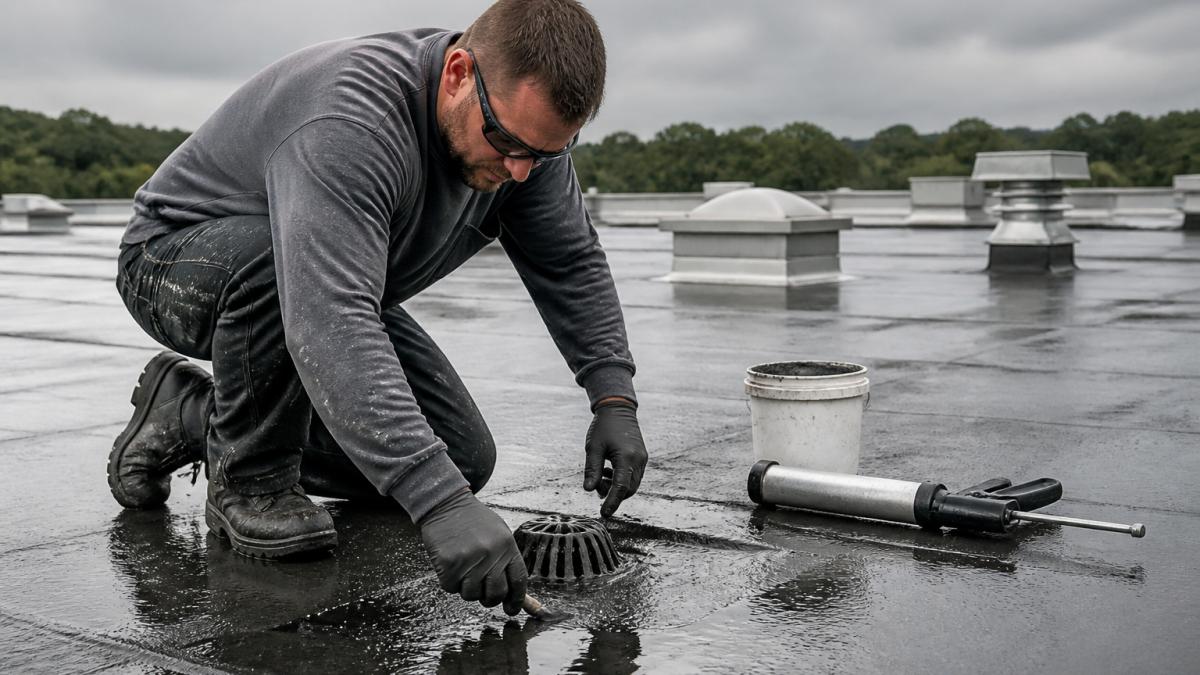
Walk your roof regularly to spot visible damage. Look for membrane separation at edges and seams, and check flashing (the metal or rubber seal around vents, pipes, and penetrations) for separation or corrosion. Seam failure is one of the most common reasons for leaks in commercial flat roofs.
Ponding Water and Drainage Issues
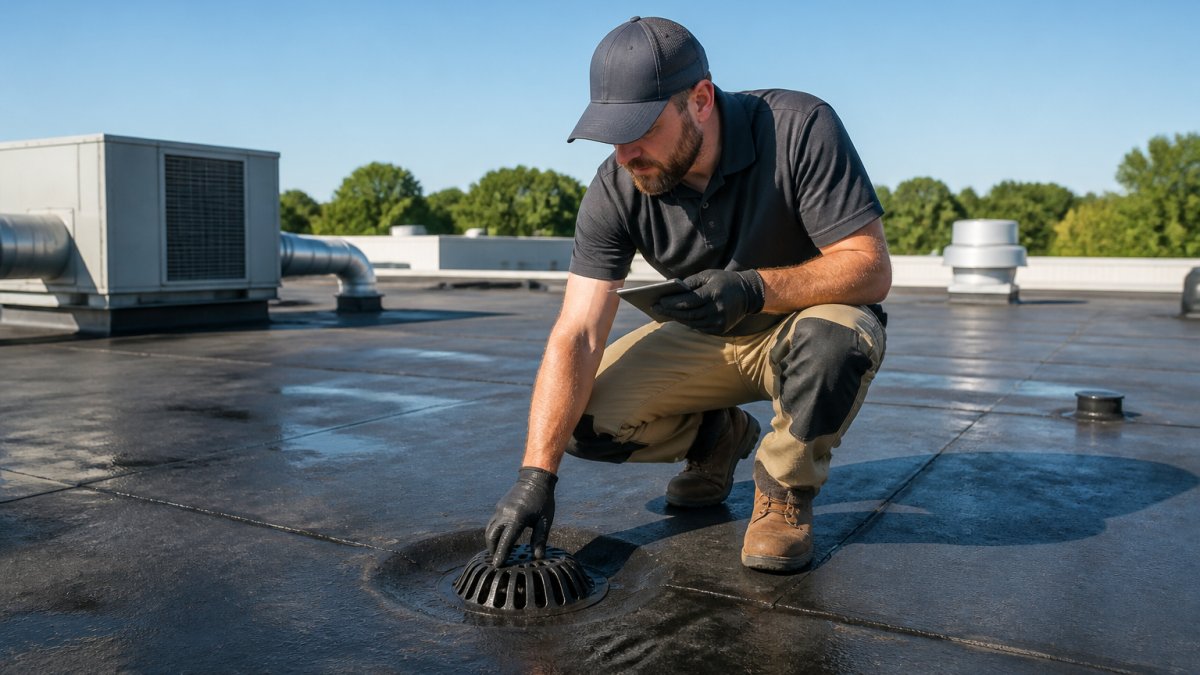
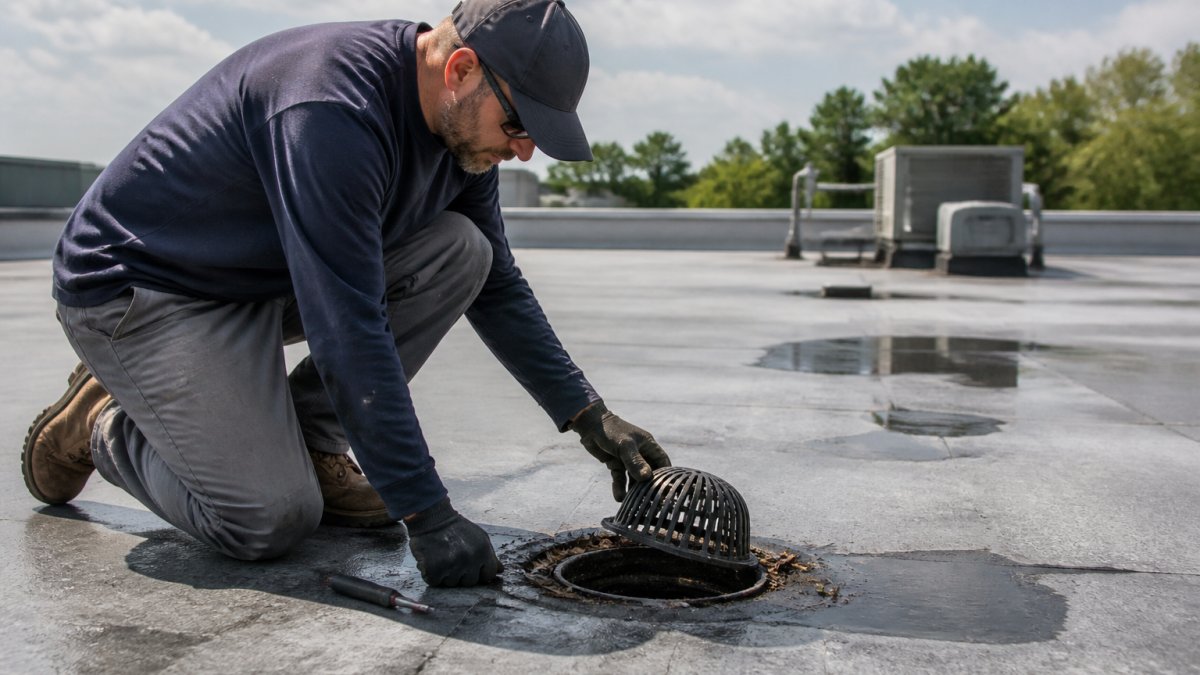
Ponding water should drain within 48 hours. If water pools and stays, your drainage system isn't working. Ponding creates weight and accelerates membrane deterioration. Check gutters and downspouts for debris that blocks drainage.
Commercial Roof Leak Detection Methods
Finding the exact leak source is difficult, water travels along the substrate before dripping through, so interior stains may be far from the actual leak point.
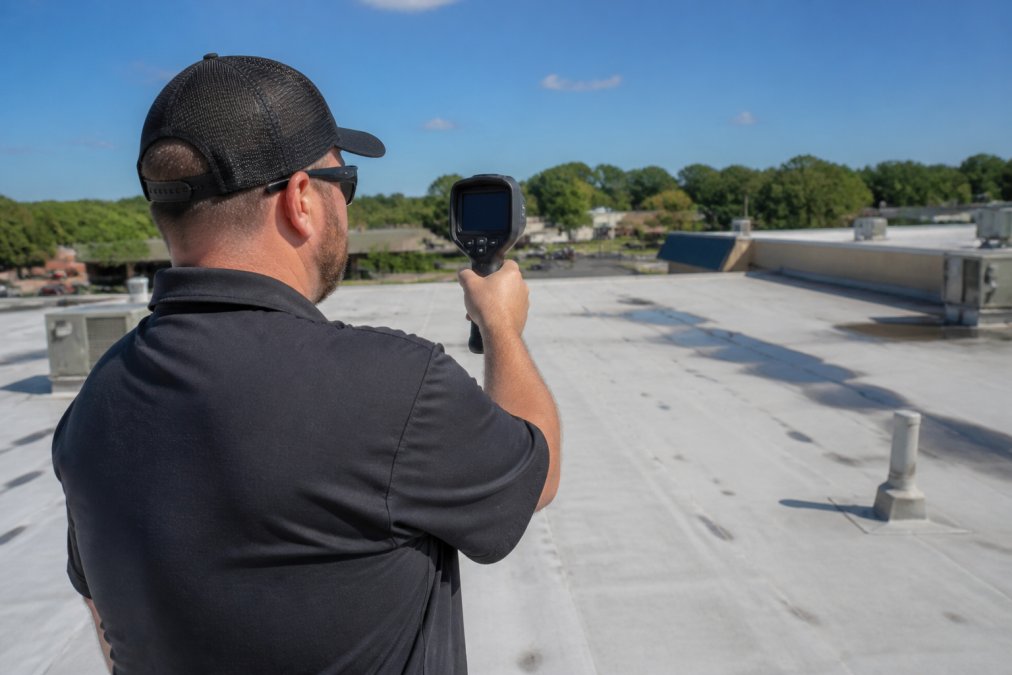
Thermal Imaging and Moisture Detection
Thermal imaging detects temperature differences to find moisture before visible damage appears. Moisture detection meters measure water content in the substrate to pinpoint problem areas.
Physical Inspection and Seam Assessment
Physical inspection remains essential. Trained inspectors examine membrane separation, flashing failure, seam damage, and foot traffic damage, documenting all findings for repair planning.
Commercial Roof Inspection Frequency and Best Practices
Most retail centers need inspections at least twice per year, spring to reveal winter damage and fall to prepare for winter weather. After severe weather, inspect immediately and document damage with photos for insurance.
Keep detailed records of inspections, repairs, and maintenance. This documentation supports insurance claims and warranty tracking.
Flat Roof Maintenance Checklist for Property Managers
A structured maintenance program extends roof lifespan by stopping small problems from becoming big ones.
Seasonal Maintenance Tasks
Spring: Clear winter debris, check for ice dam damage and membrane separation, inspect flashing, check for ponding water.
Summer: Inspect membrane and seams, examine coatings, ensure drainage is clear, document damage with photos.
Fall: Remove debris, inspect drains and flashing, check for brittleness, prepare for snow loads.
Winter: Monitor snow accumulation, clear drains, check for new leaks after storms.
Documentation and Warranty Tracking
Keep centralized records of inspections, maintenance, and repairs with photos. Track warranty requirements, most require maintenance documentation or claims may be denied.
| Task | Frequency | Owner | Status |
|---|---|---|---|
| Visual inspection | Twice yearly | Facility manager | Scheduled |
| Thermal imaging | As needed | Professional contractor | On call |
| Seam assessment | Annually | Roofing contractor | Scheduled |
| Drainage cleaning | Quarterly | Maintenance staff | Ongoing |
| Warranty review | Annually | Property manager | Documented |
Repair vs. Replacement: Making the Right Decision
The choice between repair and replacement depends on age, condition, repair costs, and lease structure.
Assessing Roof Age and Structural Integrity
Most flat roofs last 15-20 years. Roofs under 10 years old typically warrant repair; those over 20 years old need replacement. If more than 20 percent shows damage or the substrate is compromised, replacement is necessary. New roofs with reflective coatings reduce cooling costs.
Cost Considerations and Lease Impact on Replacement Decisions
In triple-net leases, replacement costs pass through to tenants as operating expenses. Calculate total cost of ownership: ongoing repairs over 5-10 years versus replacement today. Emergency repairs are far more expensive than planned replacement and can force tenant closures. Communicate replacement decisions to tenants early with timeline and cost allocation. Document the decision with age, condition, repair costs, and replacement costs.
Energy Efficiency, Tax Incentives, and Sustainability Benefits
Reflective membranes (TPO or PVC) reduce roof surface temperatures by 30-50°F, reducing cooling costs. Energy-efficient replacements may qualify for tax deductions under the Energy Policy Act if they meet ASTM E1980 requirements. High-performance roofs contribute to LEED certification and increase property value.
Preventative Maintenance Extends Roof Life and Delays Replacement
Preventative maintenance extends roof life and delays replacement. Regular inspections, seam repairs, coating maintenance, and drainage cleaning cost far less than emergency repairs or replacement. Document all work meticulously to justify future replacement costs and support insurance claims. Create a maintenance reserve fund to spread costs over time.
Emergency Roof Repair and Operational Impact Mitigation
When a roof fails suddenly, you need fast response. Emergency repairs minimize disruption to retail operations. The goal is to stop water intrusion immediately while planning permanent repairs. But in retail centers, emergency response is complicated by lease obligations and the need to document everything for insurance recovery.
Understanding Tenant Liability Under Triple-Net Lease Structures
Most retail centers operate under triple-net (NNN) leases, where tenants pay base rent plus their proportional share of operating expenses, including roof maintenance and repairs. This creates ambiguity about who is responsible when the roof fails.
In a typical NNN structure, the landlord (property owner) is responsible for structural elements, including the roof membrane and major repairs.
Minimizing Tenant and Customer Disruption
Emergency repairs must happen quickly but carefully. Coordinate with tenants before work begins. Let them know what to expect and how long repairs will take.
Insurance Claim Documentation for Roof Damage
Documentation is your foundation for insurance recovery. Adjusters require specific evidence to approve claims. Start documenting immediately after discovering damage, delays weaken your claim.
Immediate Documentation Steps:
- Photograph all visible damage from multiple angles, including wide shots showing the roof context and close-ups of specific damage points
- Record the date, time, and weather conditions when damage was discovered
- Document any water intrusion inside the building with photos of stains, affected merchandise, and damaged equipment
- Note which tenants were affected and the nature of their losses
- Preserve any damaged materials or equipment (do not discard until the adjuster has reviewed them)
Damage Report Contents:
- Detailed description of the damage location, size, and type (e.g., "membrane puncture 8 feet from southeast corner," "seam separation along north wall flashing")
- Timeline of events: when damage occurred, when it was discovered, when repairs began
- Estimated repair costs broken down by labor, materials, and emergency response fees
- Business interruption losses: tenant closures, lost revenue, temporary relocation costs
- Photos and thermal imaging results if available
- Weather records from the date of damage (wind speed, precipitation, hail reports)
Lease and Responsibility Documentation:
- Copy of the relevant lease clause governing roof repair responsibility
- Documentation of which party (landlord or tenant) is responsible for this specific repair
- Communication records showing how you notified the responsible party
Contractor and Repair Documentation:
- Detailed invoices from emergency repair contractors, including itemized labor and materials
- Scope of work documents describing what was repaired and why
- Before-and-after photos of the repair area
- Warranty information for any repairs or temporary solutions applied
Types of Flat Roofing Systems and Their Repair Needs
Different roofing membranes have different repair requirements. Understanding your roof type helps you plan maintenance and repairs effectively.
TPO, EPDM, and PVC Membranes
TPO (Thermoplastic Polyolefin): TPO membranes are heat-welded at seams. Seam failure is the most common problem. Repairs involve re-welding or patching the damaged seam. TPO roofs typically last 15-20 years with proper maintenance.
Roof Coating and Waterproofing Solutions
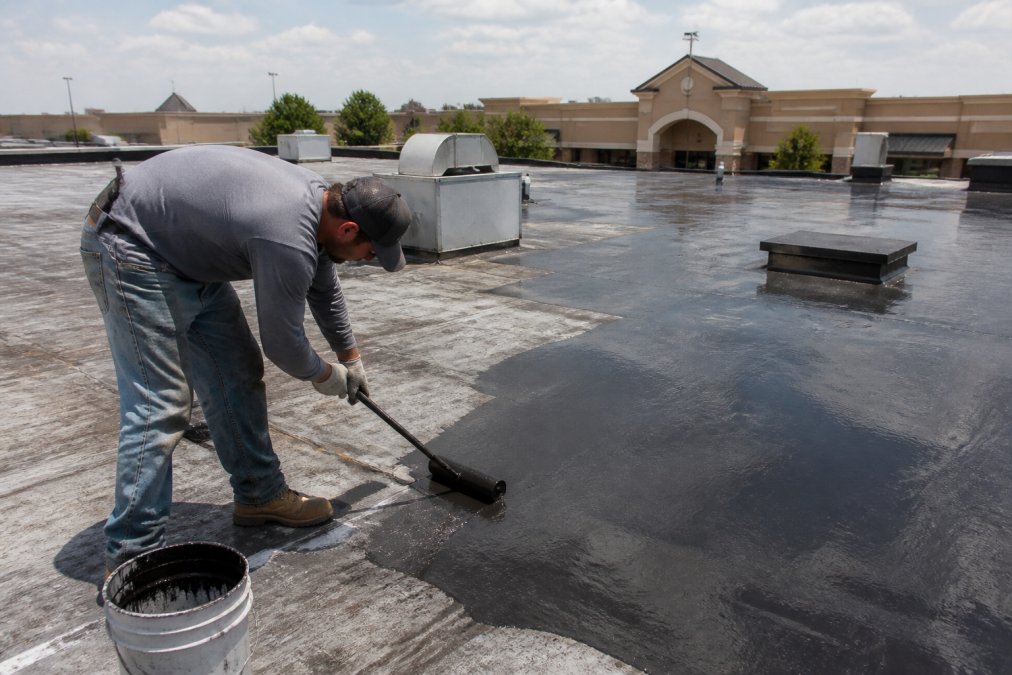
Roof coatings add a protective layer over the membrane. Reflective coatings reduce heat and improve energy efficiency. Coatings also extend membrane life by protecting against UV damage.
Frequently Asked Questions
How do I know if my retail center's flat roof needs repair or replacement?
Look for persistent leaks, membrane separation, widespread ponding water, or damage affecting more than 25% of the roof surface. If your roof is past its expected lifespan (typically 15-20 years depending on material) or requires repairs every few months, replacement may be more cost-effective than ongoing patching. A professional inspection using thermal imaging and physical assessment will determine whether seam repair and preventative maintenance can extend your roof's life or if structural issues require full replacement.
What is the recommended commercial roof inspection frequency?
Inspect your flat roof at least twice per year, spring and fall, to catch seasonal damage and debris accumulation. After severe weather events, conduct additional inspections immediately. Document all findings with photos and notes for insurance purposes and warranty tracking. Regular inspections catch flashing failure, membrane separation, and ponding water early, preventing costly emergency repairs and extending your roof's lifespan significantly.
What should be on a flat roof maintenance checklist for property managers?
Include clearing debris and vegetation from roof surfaces and gutters, checking all seams and flashing for separation or cracking, inspecting the vapor barrier and insulation for water damage, testing drainage systems for ponding water, and documenting the roof coating condition. Schedule HVAC and equipment servicing to prevent leaks around penetrations. Maintain detailed records of all maintenance, repairs, and inspections for insurance claims and warranty validation. This preventative approach extends roof lifespan and protects your building envelope.
What are the best commercial roof leak detection methods?
Thermal imaging identifies moisture trapped in insulation and membranes without invasive testing. Physical inspection focuses on seam repair needs, flashing failure, and ponding areas where water collects. Moisture meters measure water content in the roof substrate. Combine these methods for accurate diagnosis. Professional leak detection prevents temporary patches from masking underlying structural problems and ensures repairs address root causes rather than symptoms, protecting your retail center's operational continuity.