 how-to
Minimizing Business Disruption During Commercial Roof Work
Table of Contents
- Why Every Roof Project Starts With a Disruption Plan
- The Commercial Roof Replacement Timeline and What It Means for Your Business
- Communicating Roof Repairs to Employees and Building Occupants
- Managing Noise and Debris During Roof Work
- Scheduling Roof Work Around Peak Business Hours
- Protecting HVAC Units, Utilities, and Site Access
- Liability, Insurance, and Safety Rules During Roof Work
- Conclusion
- Frequently Asked Questions
Last Updated: October 2, 2026
Why Every Roof Project Starts With a Disruption Plan
A commercial roof replacement can shut down loading docks, silence conference rooms, and push staff to work around barricades for weeks, turning a routine upgrade into a full-scale business disruption. At American Enviromental Services, we've seen how much of that chaos is avoidable with one document written before a single crew member steps on the roof: a disruption plan.
The Commercial Roof Replacement Timeline and What It Means for Your Business
A commercial roof replacement timeline is the sequence of phases, from inspection to final walkthrough, that a roofing crew follows to remove an old roof and install a new one. Each phase brings a different kind of disruption, so knowing the order helps you plan around it.
How Long Each Phase Takes and Where Disruption Peaks
Timelines vary with roof size, material, and weather. Still, the general shape holds:
- Inspection and planning: 1-3 days. Little to no disruption.
- Staging and setup: 1-2 days. Parking and access start to shift.
- Tear-off: 3-10 days. This is the loudest, messiest phase.
- Deck repair and insulation: 2-5 days. Moderate noise, some odor.
- Membrane installation: 3-7 days. Steady work, fewer surprises.
- Flashing and details: 2-4 days. Quieter, more precise work.
- Final inspection and cleanup: 1-2 days. Disruption winds down.
| Phase | Typical Duration | Disruption Level | What You'll Notice |
|---|---|---|---|
| Inspection and planning | 1-3 days | Low | Occasional roof access |
| Staging and setup | 1-2 days | Low to moderate | Parking and access changes |
| Tear-off | 3-10 days | High | Noise, vibration, debris |
| Deck repair and insulation | 2-5 days | Moderate | Odor, intermittent noise |
| Membrane installation | 3-7 days | Moderate | Steady equipment noise |
| Flashing and details | 2-4 days | Low | Minor access limits |
| Final inspection and cleanup | 1-2 days | Low | Walkthrough and sign-off |
Communicating Roof Repairs to Employees and Building Occupants
Communicating roof repairs to employees and building occupants means telling people what's happening, when it's happening, and how it affects them, before the work starts. Vague updates create rumors. Clear updates create patience.
A Simple Notice Template You Can Reuse
Use this template for email, printed flyers, or lobby signage. Fill in the bracketed fields.
Managing Noise and Debris During Roof Work
Managing noise and debris during roof work comes down to three controls: timing, containment, and cleanup. Get those right and most complaints disappear before they start.
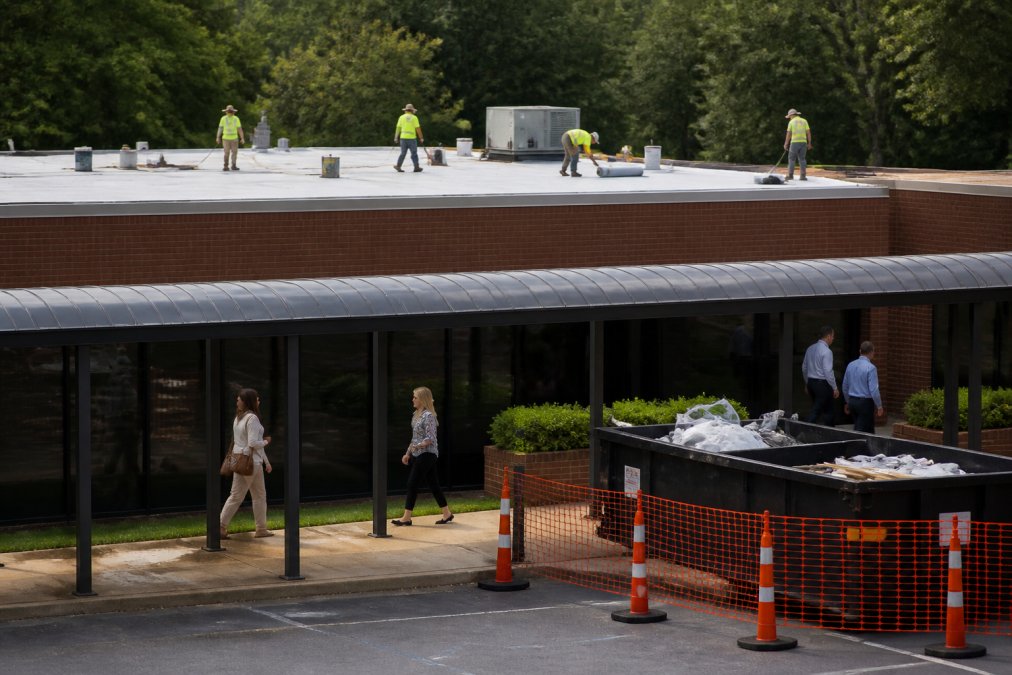
Noise: Match the Equipment to the Hour
Noise complaints rarely come from the work itself; they come from the timing of the loudest tasks. A common pattern is to schedule the noisiest equipment during off-peak hours and switch to quieter methods when the building is full.
- Tear-off and chipping: Gas-powered breakers and chipping hammers are the loudest tools on a flat roof. Schedule these before 8:00 a.m. or after 6:00 p.m. where local noise ordinances allow.
- Membrane installation: Hot-air welders and hand rollers are comparatively quiet. This is the phase to run during core business hours.
- Generators and compressors: Place them on the opposite side of the roof from occupied spaces, and use sound blankets or temporary barriers where the roof deck transmits vibration into ceiling grids.
Debris: Containment Before Cleanup
Debris control is a containment problem first and a cleanup problem second. Once grit and torn membrane hit the ground, you are reacting; if you contain them at the roof edge, you are managing.
- Covered chutes or crane lifts: Open drops are faster but scatter debris. Covered chutes keep material on a defined path and reduce the sweep-down area.
- Daily sweep-down: Walkways, parking areas, and entry mats should be swept at the end of every shift, not just at project end. Grit tracked indoors becomes a slip hazard and a cleaning cost.
- Secured dumpsters: Tarps over dumpsters and staging piles prevent wind-blown insulation and dust from leaving the site.
Dust and HVAC Intakes
Dust control deserves its own plan because tear-off grit can drift into rooftop HVAC intakes and distribute through the building. Cover or filter intakes near the work zone before tear-off begins, and check filters weekly during the project. If your building has a building automation system, monitor filter differential pressure and schedule replacements proactively rather than waiting for a comfort complaint.
A Unique Angle: Waste Diversion as Disruption Control
Most guides treat debris as a disposal problem. A better frame is waste diversion as a disruption-control tool. Separating tear-off material into recyclable streams (membrane, insulation, metal flashing) often means more dumpsters on site, which can increase the physical footprint. The trade-off is real: fewer dumpsters means less parking disruption but more landfill waste; more dumpsters means better diversion but tighter staging.
Scheduling Roof Work Around Peak Business Hours
Scheduling roof work around peak business hours means matching the crew's loudest tasks to your quietest hours. For many buildings, that means early mornings, evenings, or weekends. But the schedule is only as good as the zoning plan behind it.
Phased Zoning: The Core Mechanism
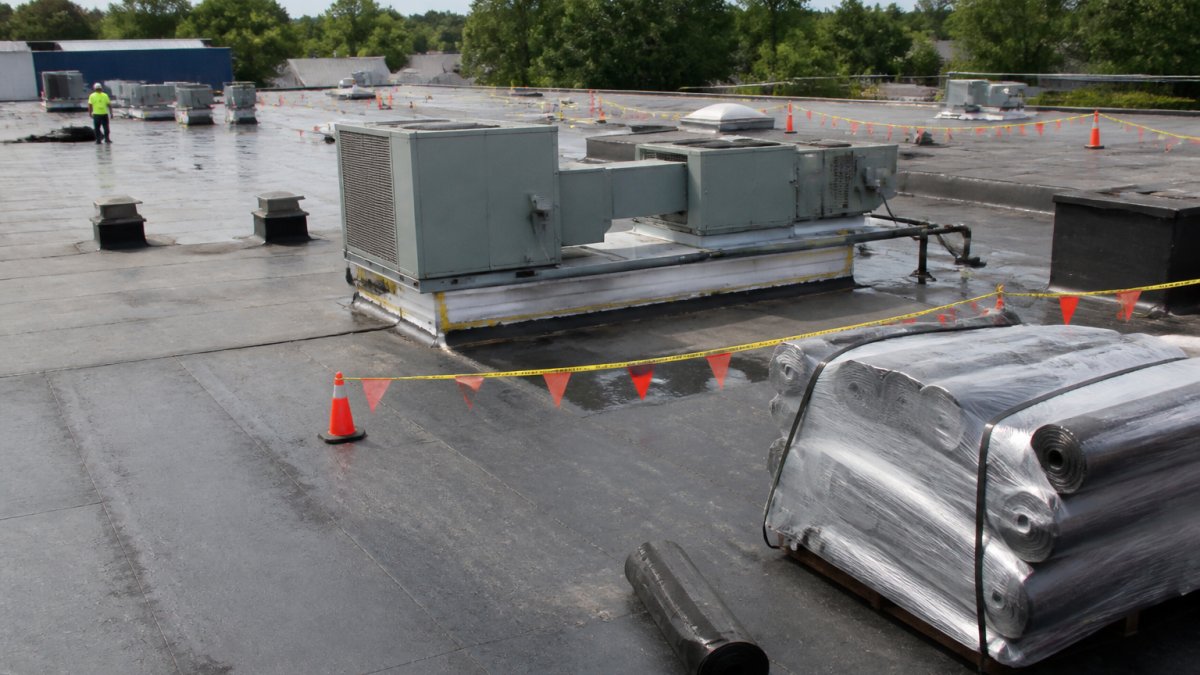
If your facility runs 24/7, full avoidance isn't possible. Phased zoning is the answer. The contractor tears off and replaces one section at a time, keeping the rest of the building fully covered and operational. The key is that the building never loses its weather barrier over occupied space.
A workable zoning sequence looks like this:
- Divide the roof into zones based on drainage, structural bays, and HVAC placement, not just square footage.
- Sequence zones so that tear-off in one area never exposes an occupied space below.
- Complete each zone through membrane and flashing before opening the next.
- Maintain temporary waterproofing at zone boundaries in case of rain.
Scheduling Rules That Hold Up in Practice
- Put tear-off on weekends or after-hours when possible. This is the loudest, messiest phase and the one most likely to generate complaints.
- Keep membrane work during business hours. Hot-air welding and hand detailing are quieter and less disruptive than tear-off.
- Never schedule crane picks during shift changes or delivery windows. Crane picks require ground-level staging and can block access for 30-60 minutes at a time.
- Build two weather buffer days into every week of the schedule. One rain delay without slack pushes every following phase, and suddenly the loudest work lands on your busiest week.
- Align zone completion with your business calendar. If you have a quarterly audit, product launch, or peak shipping week, close out a zone before it starts rather than opening a new one.
Communication Cadence: The Scheduling Multiplier
A schedule that nobody knows about is a schedule that generates complaints. Send updates at three points: two weeks out, the day before each disruptive phase, and after any schedule change. The two-week notice lets tenants plan around parking and entry changes; the day-before notice catches people who missed the first one; the change notice prevents rumors when a rain day shifts the plan.
A Unique Angle: Contractual Scheduling Levers
Most guides tell you to ask for off-hours work. Few explain how to make it enforceable. Two contractual levers matter:
- Liquidated damages for schedule overruns: A modest per-day credit for delays caused by the contractor (not weather) gives the crew an incentive to hold the schedule.
- Defined work-hour windows: Specify the exact hours when loud work is permitted, and tie payment milestones to compliance. This turns a verbal request into a measurable requirement.
Protecting HVAC Units, Utilities, and Site Access
HVAC protection during roof work is not optional. Rooftop units sit on the same deck being torn up, and debris, vibration, or a dropped tool can take a unit offline in the middle of summer.
Before work starts, your contractor should:
- Cover or filter HVAC intakes near the work zone
- Disconnect and cap gas lines serving rooftop units
- Photograph every unit before and after the project
- Mark utility penetrations so crews avoid them during tear-off
Liability, Insurance, and Safety Rules During Roof Work
Liability and insurance during roof work is where most property managers get caught off guard. A single uninsured subcontractor or a damaged tenant vehicle can turn a routine project into a claim.
Before signing anything, confirm:
- The contractor carries general liability and workers' compensation coverage
- Certificates of insurance name your building as an additional insured
- The contract states who pays for damage to tenant property
- Fall protection and site safety plans meet current OSHA requirements
Conclusion
Roof work will always cause some friction, but the difference between a smooth project and a chaotic one is planning, not luck. A written disruption plan, clear tenant notices, and a contractor who respects your operating hours do most of the work.
Frequently Asked Questions
How disruptive is replacing a commercial flat roof?
A typical commercial roof replacement disrupts the building above, not inside it. Tear-off, deck repair, and membrane installation happen on the roof, so most offices, warehouses, and retail spaces stay open. The real friction points are noise from tear-off, dumpster and material staging in the parking lot, and temporary HVAC shutdowns. A phased plan that zones the roof into sections keeps business disruption limited to specific days and areas instead of the entire project.
How can I coordinate roof repairs with peak business hours?
Schedule the loudest work, especially tear-off and any chipping or grinding, before opening or after closing. Many contractors run tear-off crews from early morning until the building opens, then switch to quieter tasks like insulation layout or membrane welding. If your operation runs around the clock, ask for a phased schedule that works one roof zone at a time so you never lose full coverage or full parking capacity at once.
What safety measures should be in place during commercial roof replacement?
Ask your roofing contractor for a site-specific safety plan before mobilization. It should cover fall protection and guardrails, barricades and warning lines around the building perimeter, debris netting or enclosed chutes, and designated staging areas away from entrances and ADA paths. Crews should also have a plan for protecting HVAC units, skylights, and roof drains, plus daily housekeeping so fasteners and membrane scraps never reach customer or employee walking areas.
What is the 25% rule in roofing and how does it affect project planning?
The 25% rule applies to roof repairs in many building codes and insurance policies: if the damaged area exceeds roughly a quarter of the roof, the whole roof may need to meet current code rather than just the damaged section. That changes project scope, cost, and timeline, so it directly affects how you phase work around tenants. Ask your contractor to document the damaged square footage and confirm with your local code official before assuming a small repair will stay small.